


Introduction
Consumers across India widely consume jaggery as a natural sweetener. Although manufacturers produce jaggery mainly during the sugarcane crushing season, demand remains strong throughout the year. This situation challenges jaggery manufacturers and entrepreneurs to maintain revenue when fresh sugarcane is unavailable. To overcome this challenge, businesses can focus on proper planning, storage management, product diversification, and value-added products such as Raab (Liquid Jaggery).
Understanding the Off-Season Challenge
Most jaggery units operate only during the sugarcane harvesting season. Once the crushing season ends, production activities slow down significantly. Many businesses face lower cash flow, underutilized machinery, and reduced market activity. However, businesses should not treat the off-season as a period of inactivity. Instead, they should use this time to strengthen sales, branding, and product development.
Proper Storage Is the Foundation
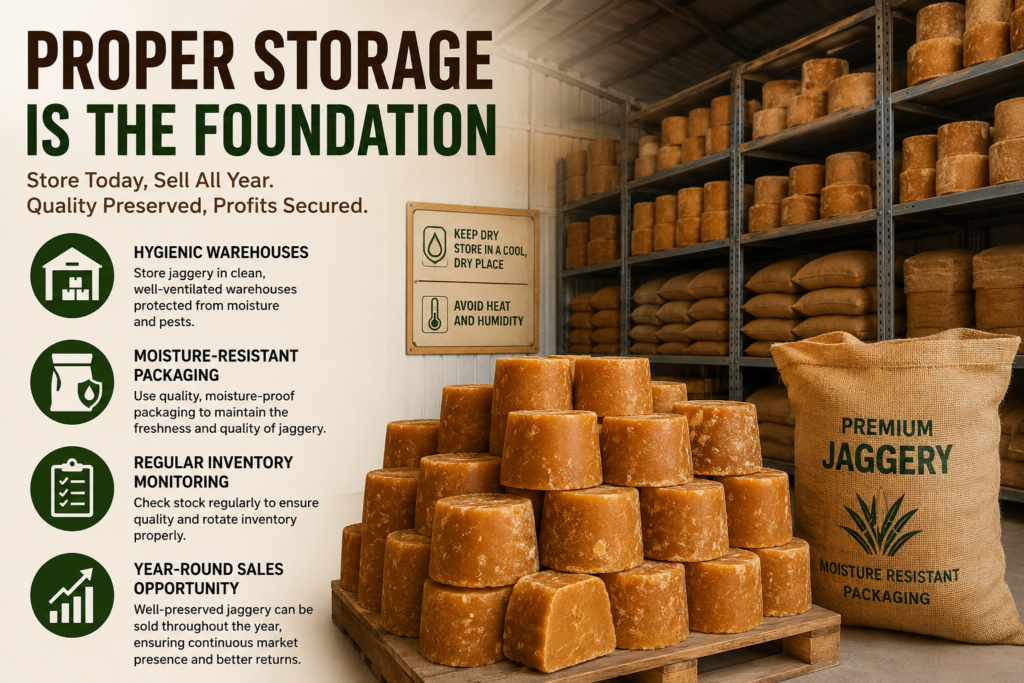
One of the most effective ways to generate revenue during the off-season is by storing high-quality jaggery produced during the season. Since jaggery naturally absorbs moisture, proper storage is essential to maintain its quality.
Manufacturers should focus on hygienic warehouses, moisture-resistant packaging, and regular inventory monitoring. Businesses can sell well-preserved jaggery throughout the year, helping them maintain a continuous presence in the market even after production stops.
Create Value-Added Jaggery Products
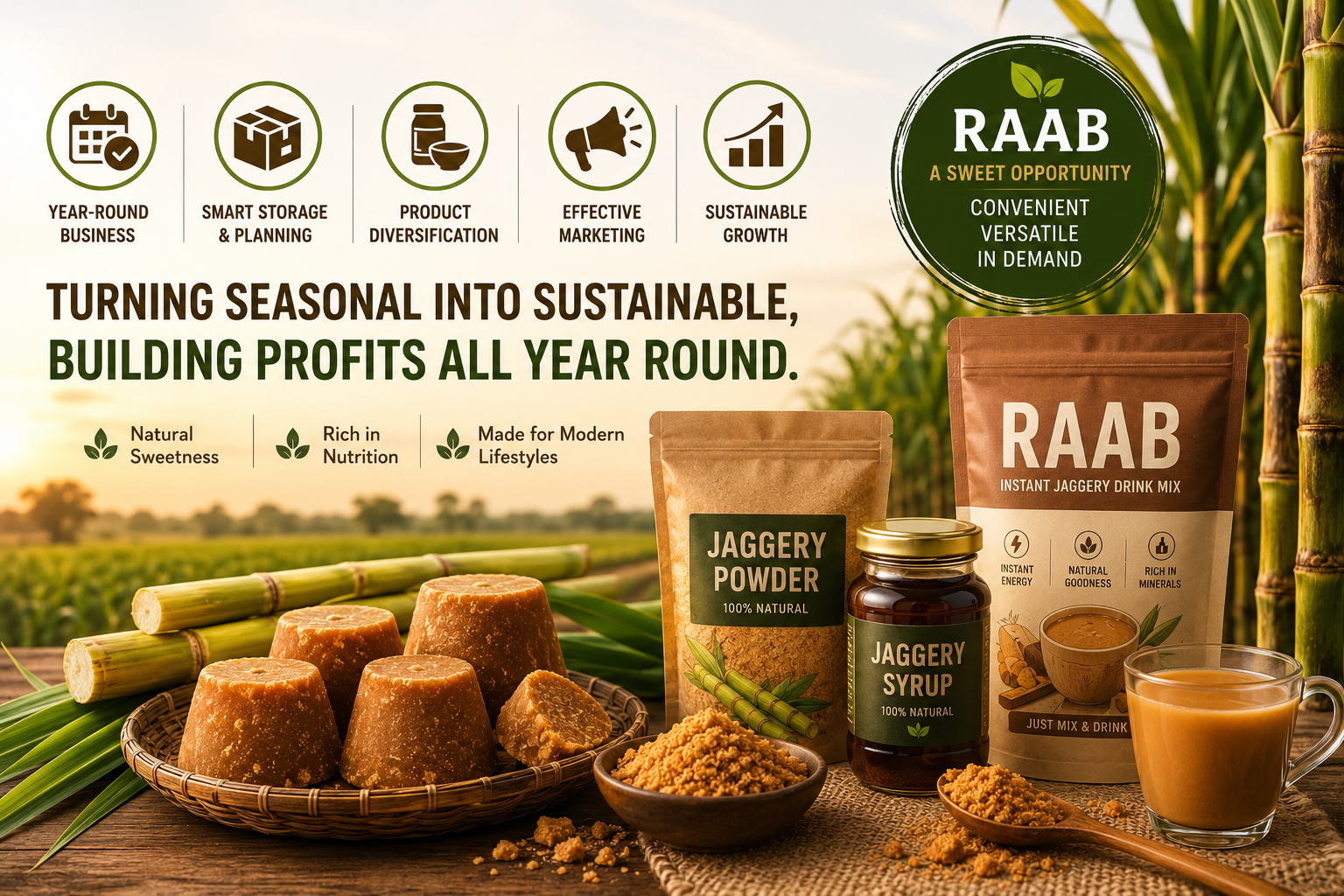
Consumer preferences are changing rapidly. Instead of selling only traditional jaggery blocks, businesses can expand into value-added products such as jaggery powder, jaggery cubes, liquid jaggery, and retail-packaged jaggery.
These products are convenient for consumers, attract premium pricing, and help manufacturers reach new customer segments. Product diversification also reduces dependence on a single revenue source and strengthens long-term business stability.
Why Raab Is Important for Off-Season Business
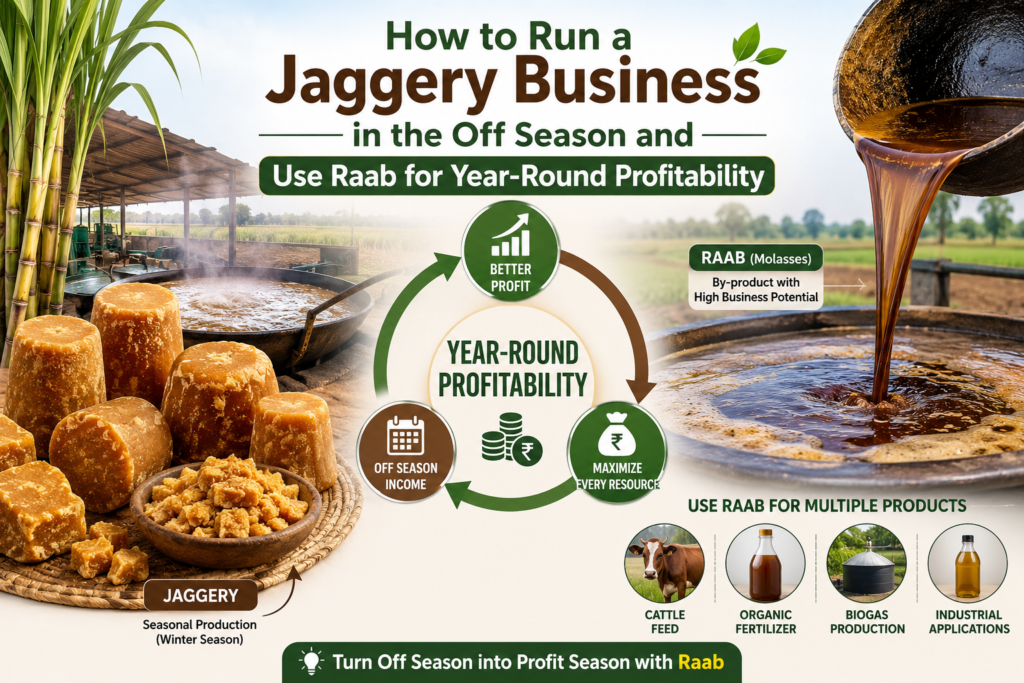
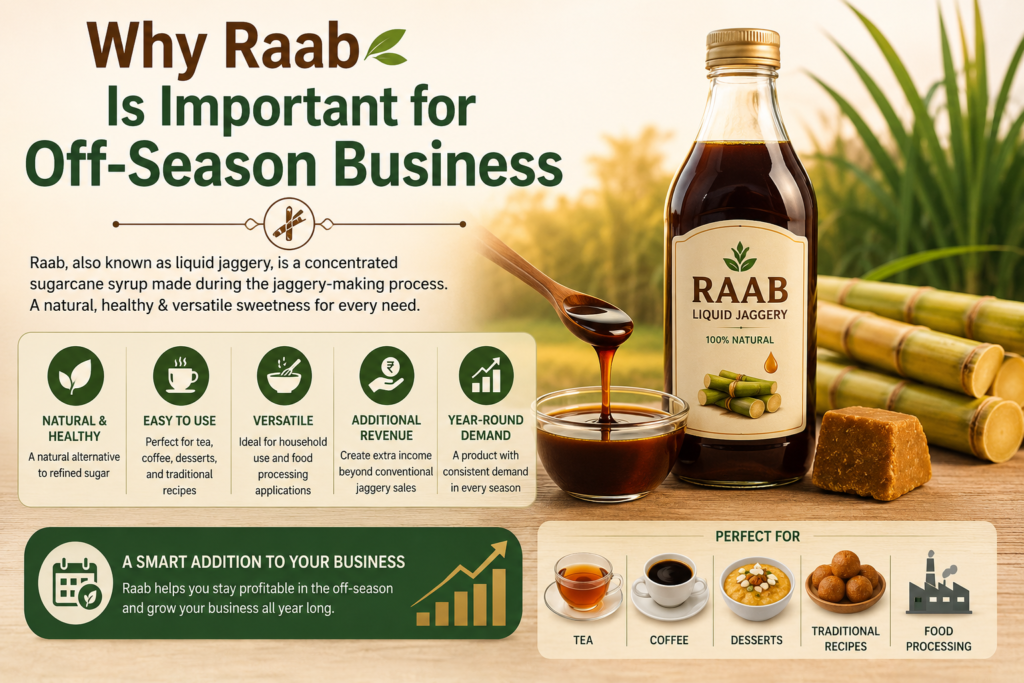
Raab, also known as liquid jaggery, is a concentrated sugarcane syrup produced during the jaggery-making process. It has become increasingly popular because consumers are looking for natural alternatives to refined sugar.
Raab is easy to use in tea, coffee, desserts, traditional recipes, and food processing applications. Its convenience and versatility make it an excellent product for year-round sales. Businesses that add Raab to their product portfolio can create additional revenue streams beyond conventional jaggery sales.
Product Opportunities with Raab
Raab can be marketed in multiple ways to serve different customer groups. Pure liquid jaggery is suitable for households and food manufacturers. Flavored versions infused with ingredients such as ginger, cardamom, or traditional spices can appeal to consumers looking for unique taste experiences.
Organic and premium Raab products can target health-conscious customers and specialty food markets. By offering multiple product variations, manufacturers can increase market reach and improve profitability.
Strengthening Sales and Marketing
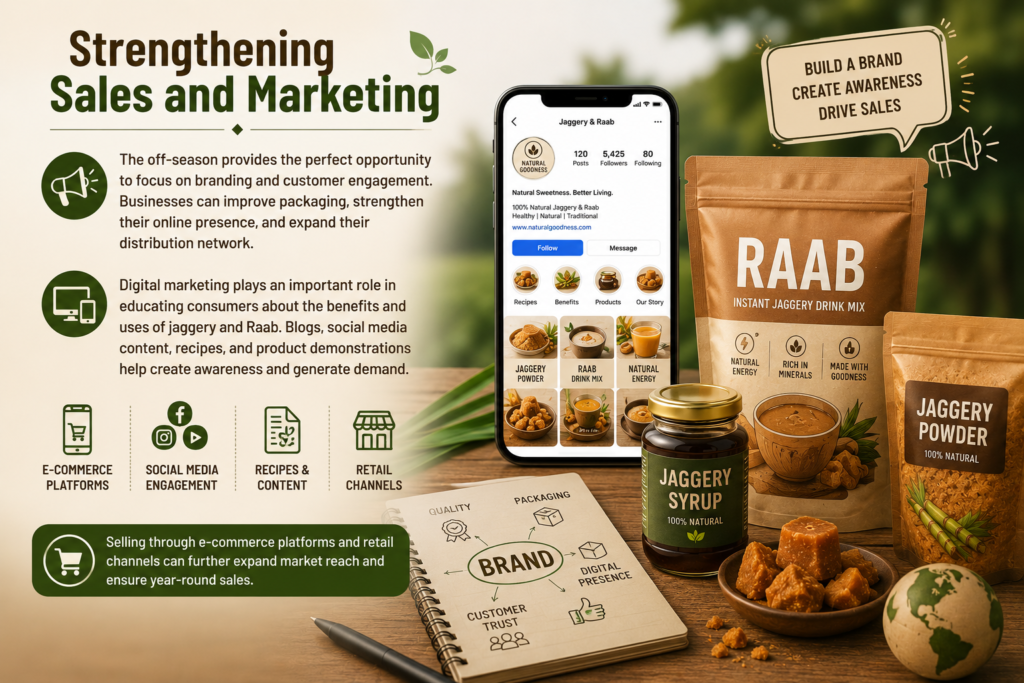
The off-season provides the perfect opportunity to focus on branding and customer engagement. Businesses can improve packaging, strengthen their online presence, and expand their distribution network.
Digital marketing plays an important role in educating consumers about the benefits and uses of jaggery and Raab. Blogs, social media content, recipes, and product demonstrations help create awareness and generate demand. Selling through e-commerce platforms and retail channels can further expand market reach and ensure year-round sales.
Building a Sustainable Business Model
The most successful jaggery businesses are no longer dependent on seasonal production alone. They combine quality manufacturing with proper storage, value-added products, modern packaging, and strong marketing strategies.
By offering products such as jaggery powder, jaggery cubes, liquid jaggery, and Raab, manufacturers can reduce seasonal risks and create consistent income throughout the year. This approach not only improves profitability but also helps build a stronger and more recognizable brand.
Conclusion
Running a profitable jaggery business in the off-season requires strategic planning rather than waiting for the next sugarcane harvest. Proper storage, product diversification, and effective marketing can help businesses maintain sales throughout the year. Among all value-added products, Raab offers one of the biggest opportunities due to its convenience, growing consumer demand, and wide range of applications.
By focusing on quality, branding, and innovative products, jaggery manufacturers can transform a seasonal business into a sustainable year-round enterprise and unlock new