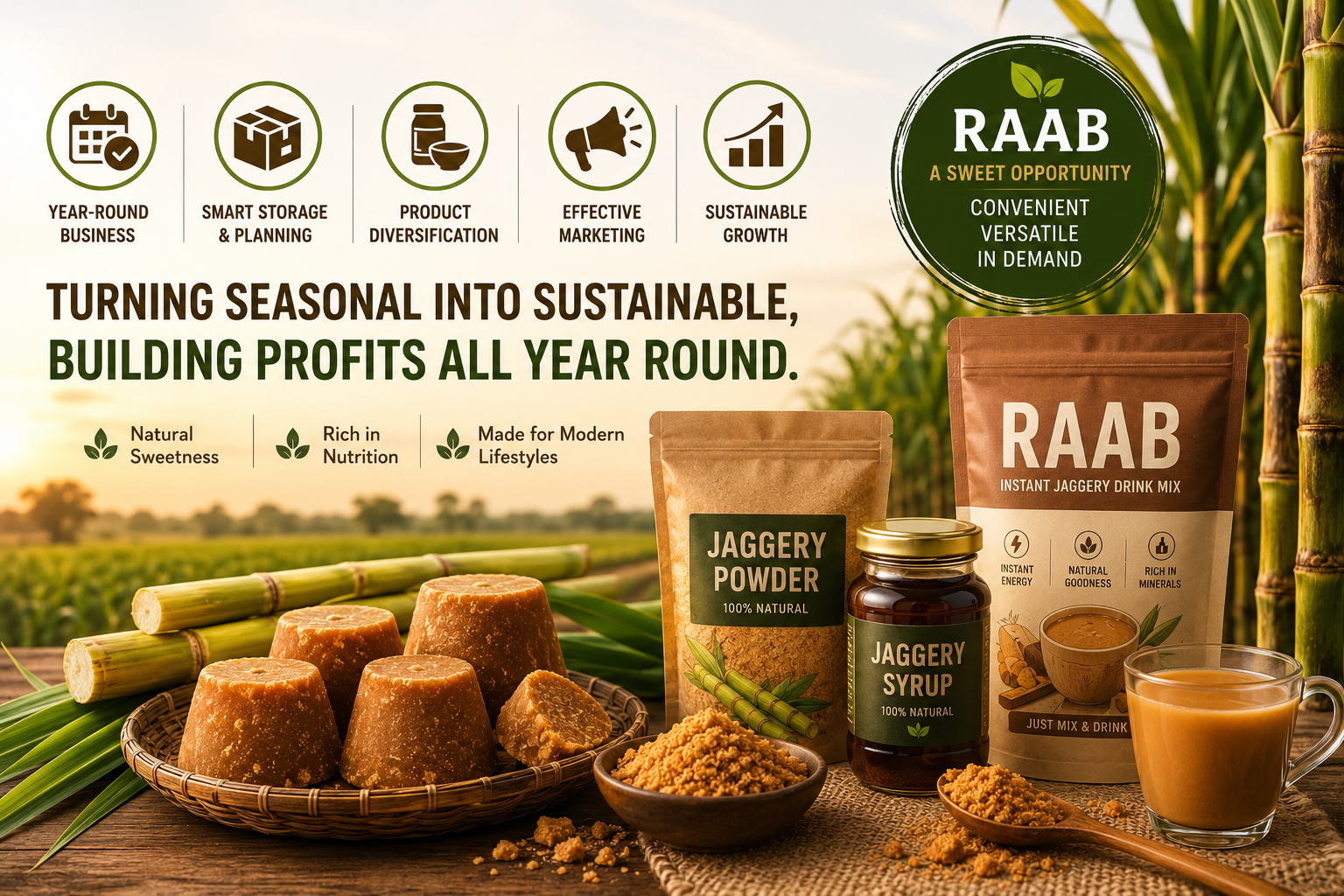




In the sun-drenched villages of India, where sugarcane fields sway under golden skies, jaggery isn’t just a sweetener—it’s heritage. Pressed from fresh sugarcane and slow-boiled in iron cauldrons by skilled farmers, this unrefined treasure connects us to centuries of tradition while offering profound wellness benefits that modern science continues to validate.
What Is Jaggery?
Jaggery, known as gur in India, is a traditional, chemical-free sweetener made from sugarcane juice or palm sap. Unlike white sugar, which undergoes extensive processing that strips away nutrients, jaggery retains its natural minerals like iron, potassium, magnesium, calcium, and antioxidants.
The method of production is delightfully simple. Fresh juice is extracted, filtered, and boiled in open pans till it reduces to a syrupy consistency, then poured into molds to set. This age-old method of making it retains the natural flavor and nutrition, offering everything from powdery jaggery to blocks to spice-infused varieties.

A Heritage Woven Into Indian Culture
Jaggery has been the sweet heart of Indian cooking long before refined sugar entered our kitchens. From gur chana in school tiffins to til-gur laddoos during Makar Sankranti, or peanut chikki during cold evenings, jaggery is deeply woven into India’s cultural fabric.
During festivals like Makar Sankranti and Pongal, jaggery plays a significant role symbolizing prosperity and joy. Families gather around tables laden with delicacies like tilgul, gajar ka halwa, halwa, payasam, and laddu—all sweetened with this golden healer.In temples across India, jaggery is offered as prasad, symbolizing purity and satvik food. It’s not just sweet—it’s soulful, stirred in iron pots and sweetened by the sweat of Indian farmers.

Ayurveda’s Sweetest Secret
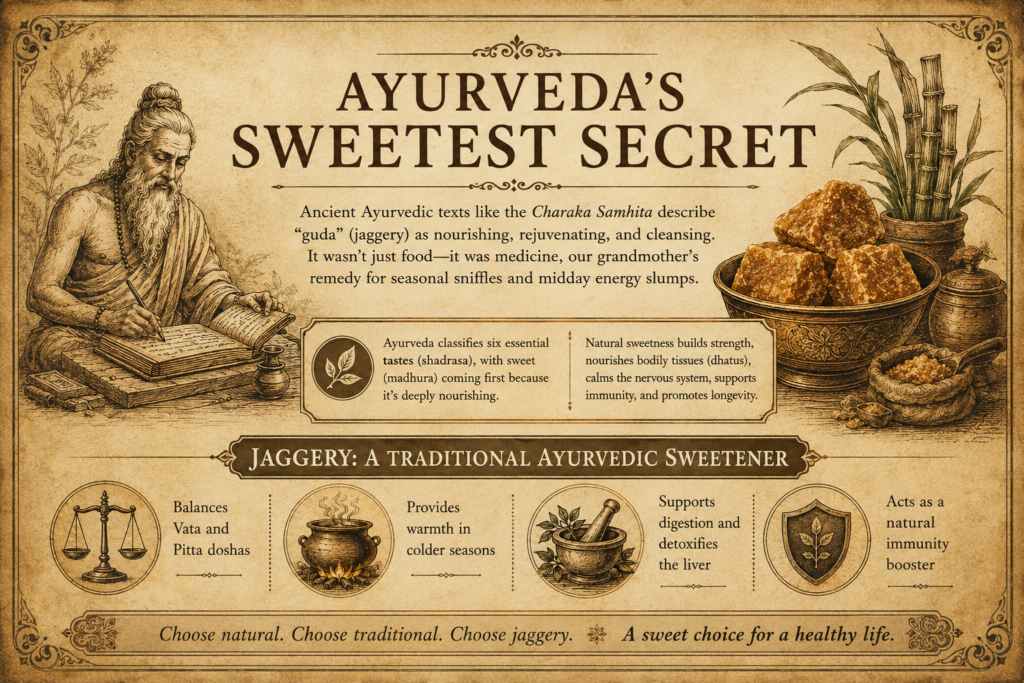
Ancient Ayurvedic texts like the Charaka Samhita describe “guda” (jaggery) as nourishing, rejuvenating, and cleansing. It wasn’t just food—it was medicine, our grandmother’s remedy for seasonal sniffles and midday energy slumps.
Ayurveda classifies six essential tastes (shadrasa), with sweet (madhura) coming first because it’s deeply nourishing. Natural sweetness builds strength, nourishes bodily tissues (dhatus), calms the nervous system, supports immunity, and promotes longevity.
Jaggery is considered a traditional Ayurvedic sweetener that:
- Balances Vata and Pitta doshas
- Provides warmth in colder seasons
- Supports digestion and detoxifies the liver
- Acts as a natural immunity booster
Health Benefits That Shine
Jaggery contains lots of antioxidants, zinc, selenium, potassium, magnesium, iron, and more vital nutrients, making it much more beneficial than white sugar.
Key wellness benefits include the following:
- Detoxifies the liver and blood—natural phytochemicals help flush out toxins
- Relieves constipation and boosts digestion—High mineral content activates digestive enzymes
- Provides quick energy without sugar crashes—a lower glycemic index releases energy slowly
- Improves hemoglobin levels—Rich iron content combats anemia
- Reduces PMS symptoms and respiratory issues—especially when infused with ginger or pepper
- Warmth during winters – Balances Vata and Kapha doshas
Spice-infused jaggery powders are used to relieve cough and cold, boost digestion, and warm the body in winters. Just add a spoonful to hot water or tea for an instant immunity boost.
Jaggery vs. Sugar: The Clear Winner
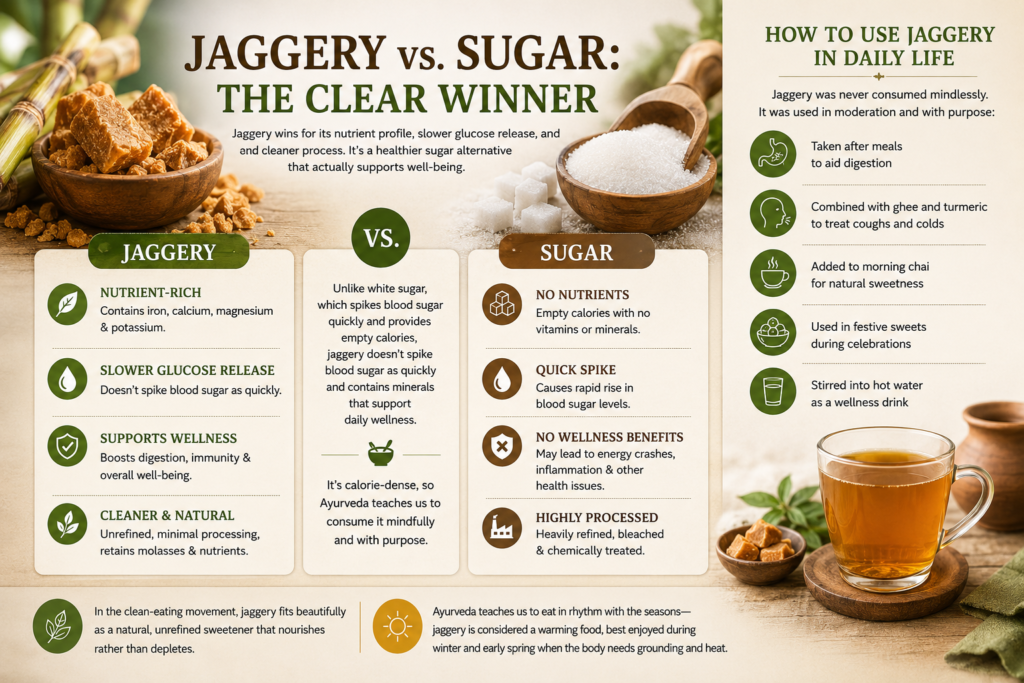
Jaggery wins for its nutrient profile, slower glucose release, and cleaner production process. It’s a healthier sugar alternative that actually supports well-being.
Unlike white sugar, which spikes blood sugar quickly and provides empty calories, jaggery doesn’t spike blood sugar as quickly and contains minerals that support daily wellness. It’s calorie-dense, so Ayurveda teaches us to consume it mindfully and with purpose.
How to Use Jaggery in Daily Life
Jaggery was never consumed mindlessly. It was used in moderation and with purpose:
- Taken after meals to aid digestion
- Combined with ghee and turmeric to treat coughs and colds
- Added to morning chai for natural sweetness
- Used in festive sweets during celebrations
- Stirred into hot water as a wellness drink
In the clean-eating movement, jaggery fits beautifully as a natural, unrefined sweetener that nourishes rather than depletes. Ayurveda teaches us to eat in rhythm with the seasons—jaggery is considered a warming food, best enjoyed during winter and early spring when the body needs grounding and heat.
The Golden Future of Jaggery
Jaggery is not just food—it’s a tradition stirred in iron pots, sweetened by the sweat of Indian farmers, and offered with love in every Indian home. From morning chai to festive sweets, jaggery connects us to our roots and reminds us that wellness often begins with the simplest, purest ingredients.
As health consciousness grows globally, jaggery emerges as India’s original superfood sweetener, rooted in Ayurveda and Indian food heritage. It nourishes, heals, and truly loves you back.
In every golden bite of jaggery lies the essence of tradition, the wisdom of ancestors, and the promise of wellness—a sweetness that’s been cherished for centuries and will continue to sweeten our lives for generations to come.