


Despite the increasing demand, traditional methods still limit the growth of the industry.
Modern jaggery production in India is emerging as the solution to overcome these challenges. By adopting modern jaggery production in India, producers can meet evolving market expectations through automation, higher efficiency, and environmentally friendly practices, making modern jaggery production in India essential for future growth.
With over 8 million tonnes produced annually, India is the world’s top producer of jaggery. This traditional industry is based in states like Maharashtra, Uttar Pradesh, and Karnataka, where jaggery has been made for centuries as an unrefined, natural sweetener.
The demand for premium jaggery is rising both domestically and abroad as consumers become more conscious of sustainability, organic products, and health. India is the world’s largest producer of jaggery, contributing more than 8 million tonnes each year. States such as Maharashtra, Uttar Pradesh, and Karnataka serve as the foundation of this traditional industry, where jaggery has been produced as a natural and unrefined sweetener for centuries.
Today, as consumer awareness of health, organic products, and sustainability grows, so does demand for high-quality jaggery—both domestically and internationally.
Challenges in Traditional Jaggery Production
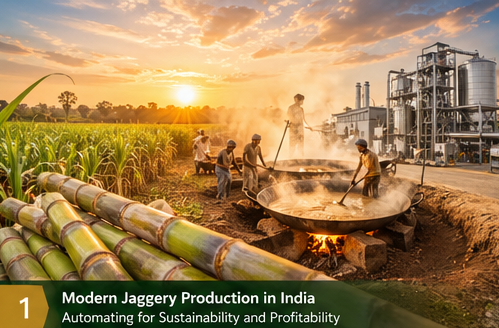
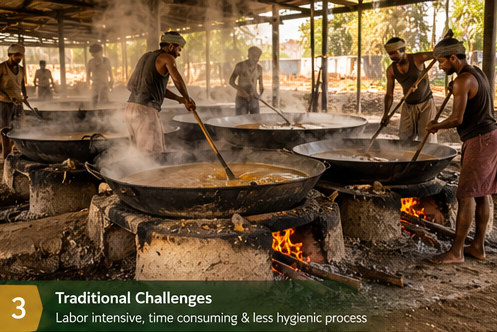
Traditional jaggery production is primarily manual, with sugarcane juice being boiled in an open pan with coal or firewood. This method is not only labour-intensive, requiring 20-30 workers per shift, but it is also time-consuming and yields inconsistent results.
Hygiene is one of the most pressing concerns. Because traditional filtration systems are simple, contaminants and microbiological contamination can contaminate the finished product. The use of chemical additives such as sulphur frequently reduces a product’s purity, rendering it unsuitable for premium markets.
Another major concern is the environmental impact. Conventional plants use a lot of water and rely heavily on fuelwood, resulting in higher carbon emissions and deforestation. emissions. Furthermore, shorter shelf lives and low recovery rates (typically 50-60%) severely reduce producer profitability.
Farmers and small business owners find it challenging to expand their operations or create a genuinely profitable jaggery enterprise due to these constraints.
Rise of Modern Jaggery Production in India with Automation
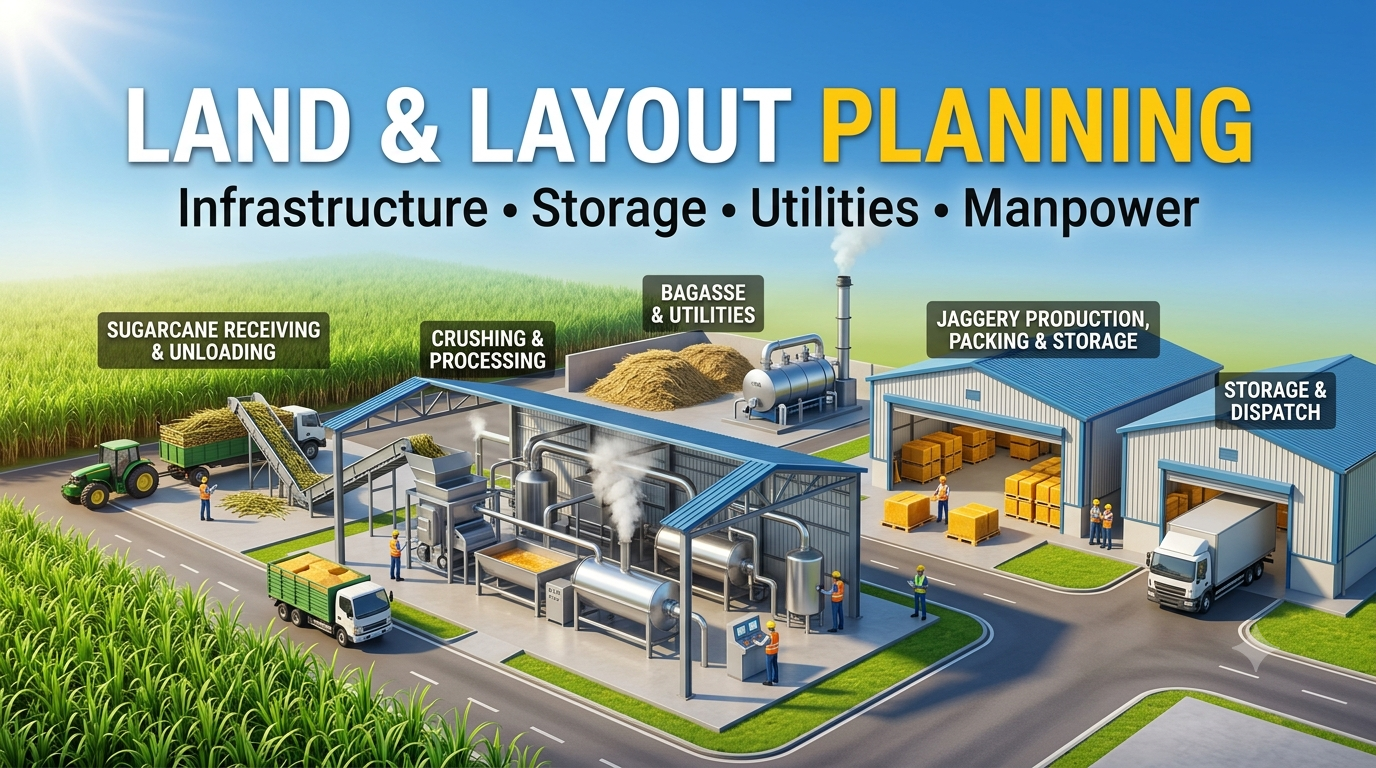
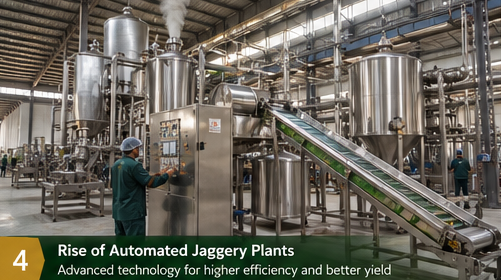
The introduction of automated jaggery machines has changed the industry. These modern systems are designed to optimise the entire production cycle, from juice extraction to finished product creation, using automation and cutting-edge engineering techniques.
While recovery rates increase dramatically to 85-95%, production time is reduced from 12-18 hours to only 3-4 hours. Higher output and profit margins are directly proportional to this increase in productivity.
Automation ensures precise temperature control, which is typically kept between 105 and 110°C, in order to achieve consistent texture, colour, and quality. Multi-stage filtration systems efficiently remove impurities, resulting in cleaner, hygienic jaggery.
Scalability is yet another significant benefit. Automated plants can be tailored to meet business needs, whether they are small 5 TCD units or large 500 TCD commercial setups. This makes them appropriate for farmers, startups, and large-scale businesses.
Sustainability in Modern Jaggery Production
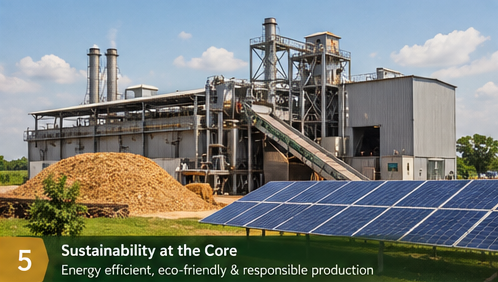
Sustainability is no longer optional—it is required. Modern jaggery processing plants incorporate eco-friendly features that significantly reduce environmental impact.
Closed-loop water systems save up to 80% on water consumption, while zero-liquid discharge systems protect nearby ecosystems from contamination. Bagasse, a sugarcane byproduct, is recycled into a renewable fuel source, reducing reliance on foreign energy and lowering operational costs.
Advanced systems also help to reduce emissions by utilising cleaner combustion techniques and energy-efficient designs. These innovations are consistent with India’s long-term environmental goals and have the potential for carbon credit benefits.
Furthermore, IoT-enabled monitoring systems allow for real-time measurements of parameters like pH, brix, and moisture content. This ensures consistent product quality and adherence to food safety standards, extending the shelf life to 6-12 months.
Devanhaar Technologies: Driving Innovation in Jaggery Processing
Devanhaar Technologies is at the forefront of this transformation, working to modernise the jaggery industry with intelligent, automated, and sustainable solutions.
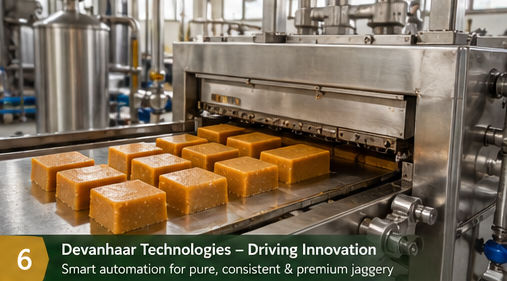
Devanhaar’s fully automated jaggery processing plants aim to reduce the complexities of traditional production. These plants employ advanced steam-based boiling systems, which provide uniform heating, increased efficiency, and superior product quality without the use of chemical additives.
One of the most significant benefits of Devanhaar’s technology is its low manpower requirements. Unlike traditional setups, their systems can run efficiently with only 1-4 workers, making them extremely cost-effective and simple to manage.
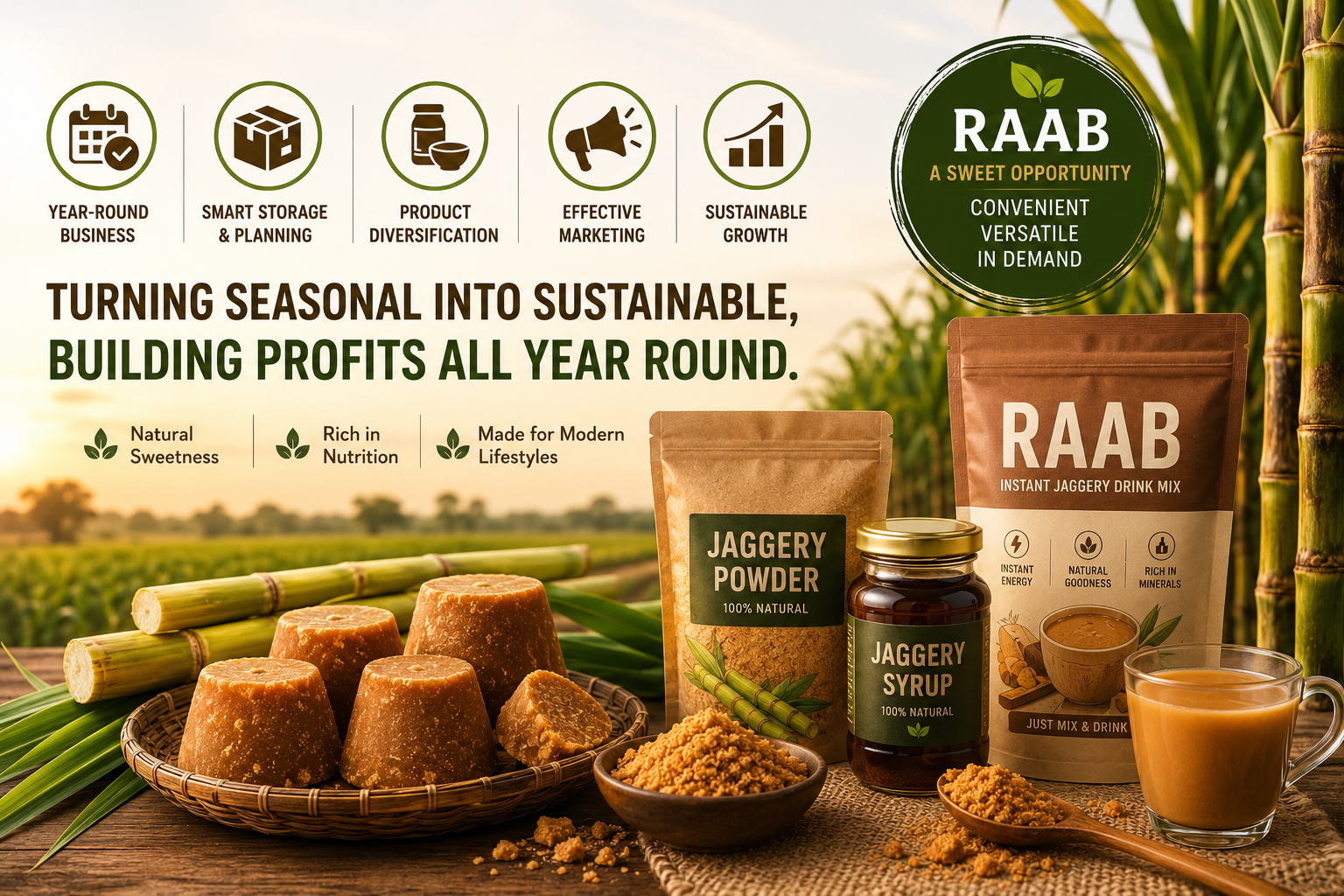
The company’s multi-stage filtration technology ensures high levels of purity and hygiene, producing jaggery in a variety of forms—solid blocks, powder, and liquid—to meet diverse market demands.
Beyond machinery, Devanhaar Technologies provides comprehensive business support, including plant setup, operational training, and strategic advice. This comprehensive approach enables farmers and entrepreneurs to transition from traditional practices to a more structured, scalable, and profitable jaggery business model.
Government Support and Market Opportunities
The Indian government actively promotes the food processing industry through programmes like PMKSY and SFURTI, which offer subsidies ranging from 25% to 50% for the establishment of modern jaggery processing facilities. Financial assistance from organisations such as NABARD helps to reduce the initial investment burden.
The global demand for organic sweeteners and jaggery exports exceeding ₹2,000 crore points to a promising market outlook. Consumers are increasingly switching from refined sugar to natural alternatives like jaggery, which is known for its mineral-rich composition and health benefits.
This shift presents a significant opportunity for producers to capture premium markets and increase profit margins.
Conclusion: The Time to Modernize is Now
The transition to modern jaggery production in India is no longer optional; it is necessary for long-term growth and profitability. Automation, hygiene, and eco-friendly practices are redefining industry standards and opening up new opportunities for growth.
Companies such as Devanhaar Technologies are playing an important role in this evolution by providing advanced jaggery processing plants. It provides automatic jaggery machines that streamline operations, reduce costs, and ensure consistent quality.
Adopting modern technology is critical for farmers, entrepreneurs, and investors looking to enter or expand into the jaggery industry.
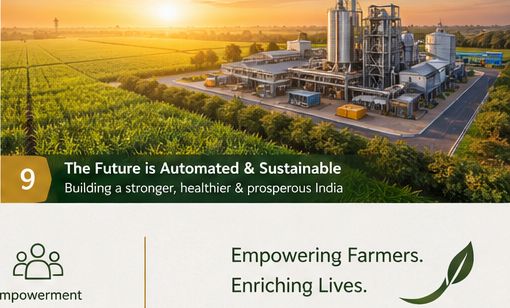
The future of jaggery is smart, sustainable, and automated—and now is the time to embrace it.