


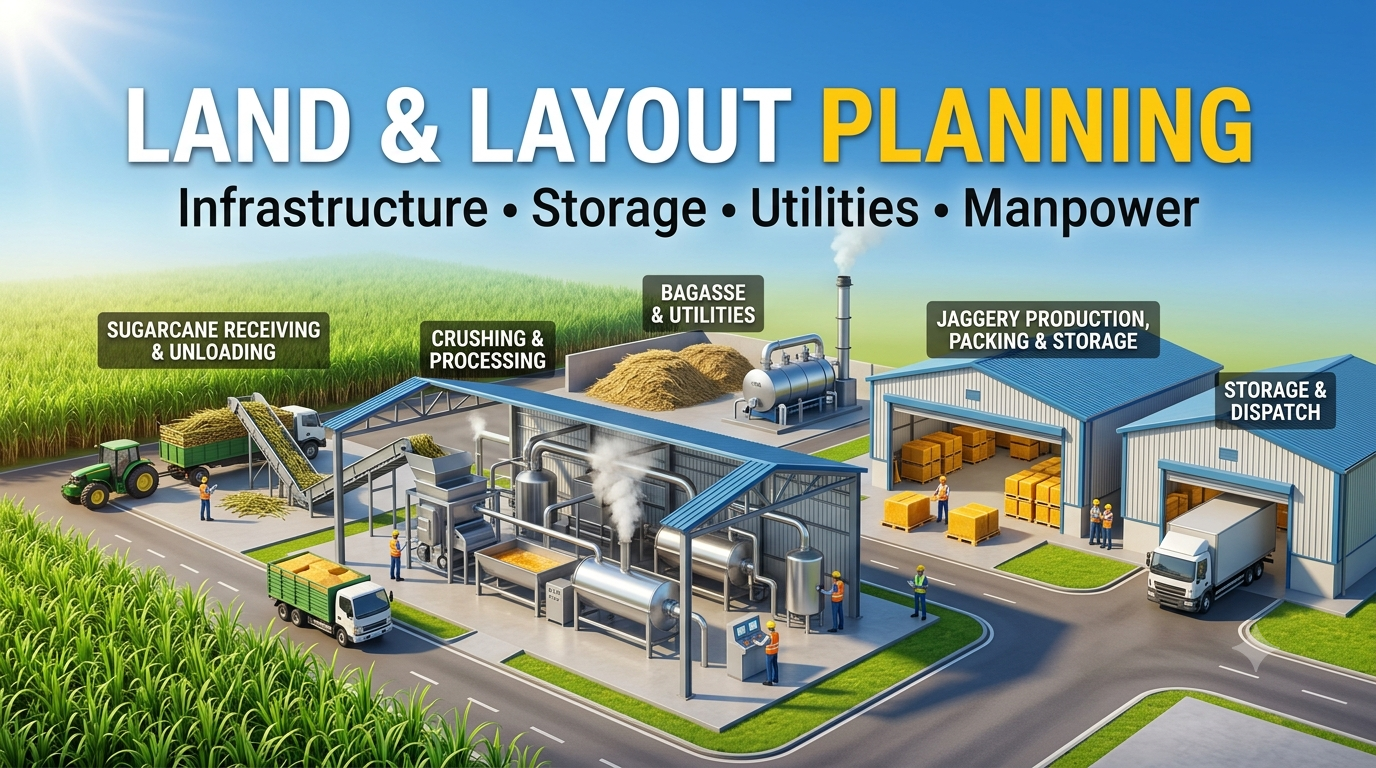
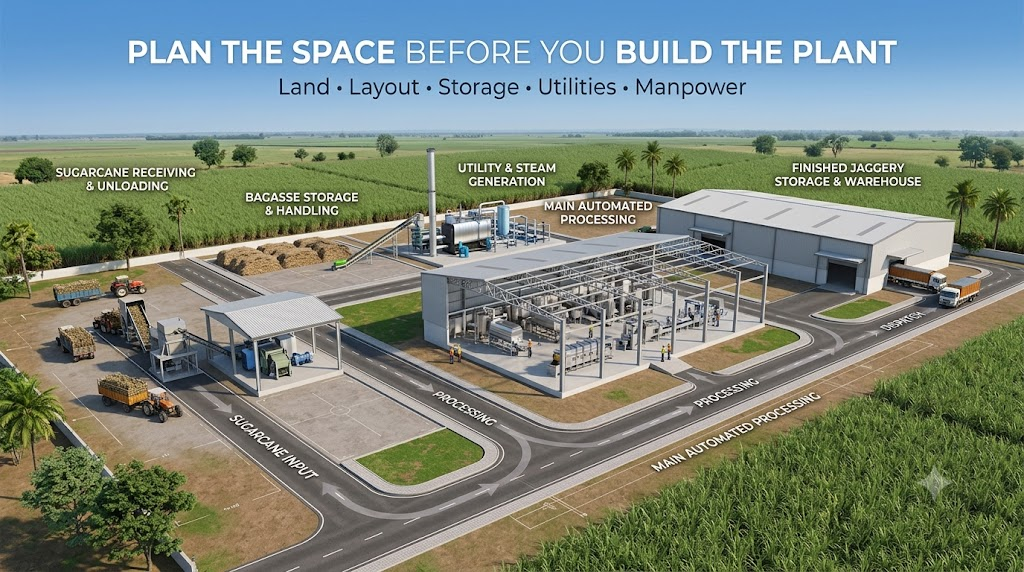
Land requirements for a jaggery plant depend on the plant capacity, machinery layout, storage needs and overall project design. Setting up a jaggery processing plant is not only about installing machinery. You also need to plan the available space, sugarcane movement, utilities, storage, vehicle access and manpower.
Proper planning before installation can help create a smoother production flow and avoid unnecessary changes later.
Land Requirements for a Jaggery Plant
The land or space required for a jaggery plant varies according to the capacity and layout of the project.
The space should not be considered only for the machinery. A practical plant setup may also require areas for:
- Sugarcane receiving and unloading
- Sugarcane movement towards the crusher
- Main processing equipment
- Bagasse handling
- Steam generation and utilities
- Finished jaggery storage
- Packing and handling
- Maintenance access
- Worker movement
- Vehicle movement
- Future expansion
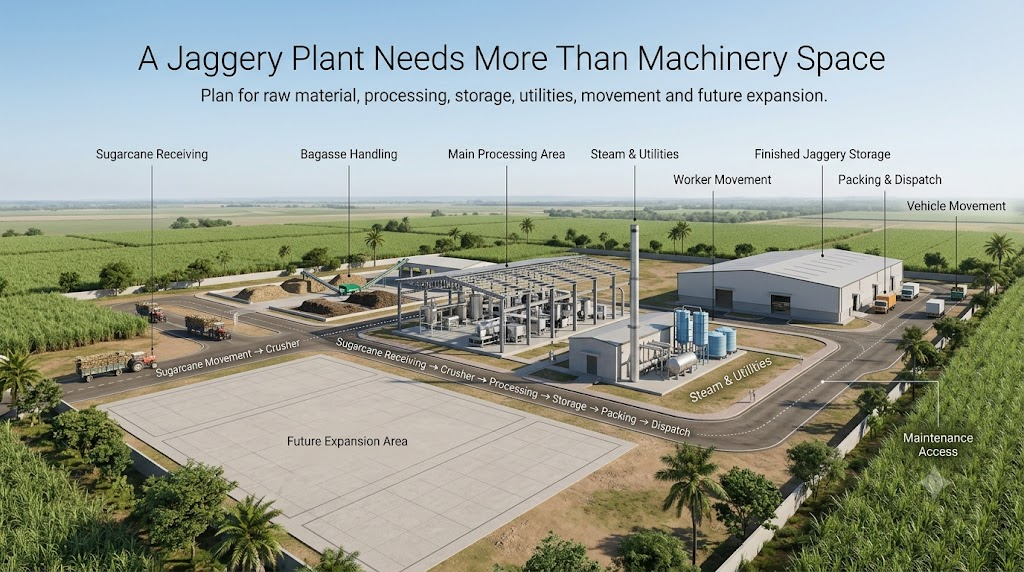
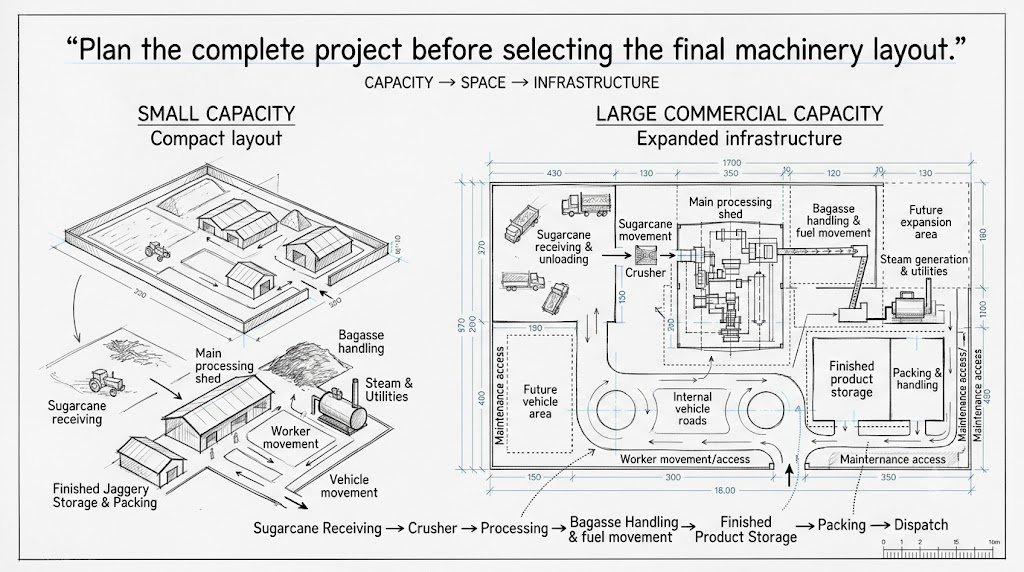
For smaller projects, the machinery installation area may be relatively compact. As plant capacity increases, additional space may be required for raw-material handling, storage, utilities and internal movement.
Therefore, instead of selecting land based only on a general area figure, you should plan the complete plant layout according to the proposed capacity.
What Infrastructure Does a Jaggery Plant Need?
A well-planned jaggery plant infrastructure should support the complete movement of raw material and finished products.
The basic production flow can be planned as:
Sugarcane → Crushing → Juice Processing → Clarification → Concentration → Jaggery Production → Handling → Storage/Packing
The major infrastructure requirements may include the following.
1. Sugarcane Receiving Area
The plant needs a suitable area where sugarcane can be received and unloaded.
Tractors, trucks or other vehicles should be able to enter the site, unload the cane and move out without disturbing other plant activities.
The receiving area should therefore be considered while planning the overall site layout.
2. Processing Area
The main processing section houses the machinery required for sugarcane crushing and jaggery production.
Adequate working and maintenance space should be provided around the equipment so that operators can monitor the system and maintenance teams can access machinery when required.
3. Bagasse Handling Area
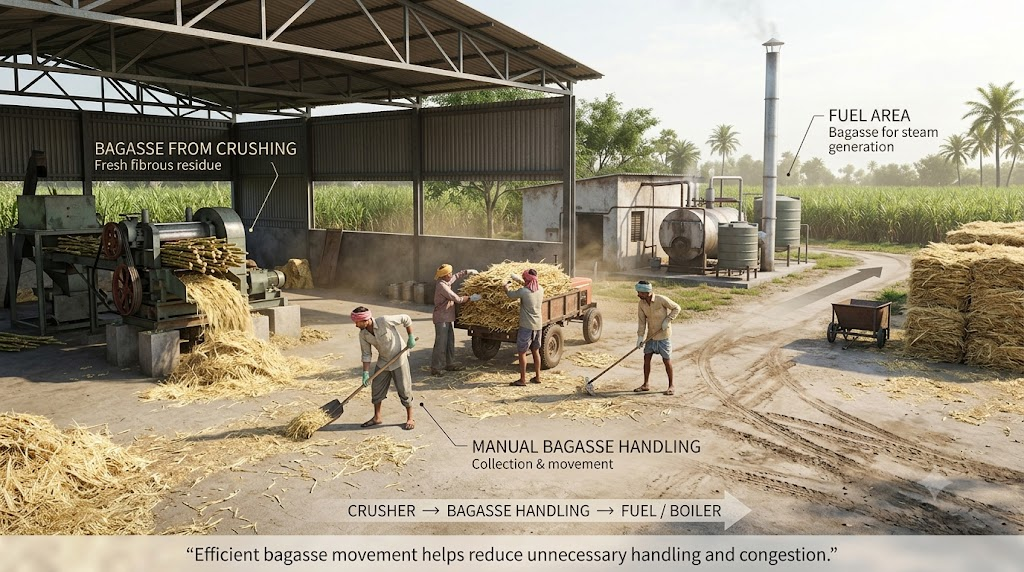
Sugarcane crushing generates bagasse, which needs to be handled efficiently.
If the plant uses bagasse as fuel, the layout should allow smooth movement of bagasse from the crushing section towards the fuel or steam-generation system.
Therefore, planning this movement properly can help avoid unnecessary handling and congestion inside the plant.
4. Utility and Steam-Generation Area
Additionally, depending on the plant design, space may be required for steam-generation equipment, water arrangements, pumps, electrical systems and other utilities.
These systems should be positioned in a way that allows safe operation, inspection and maintenance.
5. Finished Product Storage
Finished jaggery needs a suitable area for temporary or longer-term storage before dispatch.
In other words, the storage requirement depends on production volume, product type, packaging method and dispatch schedule.
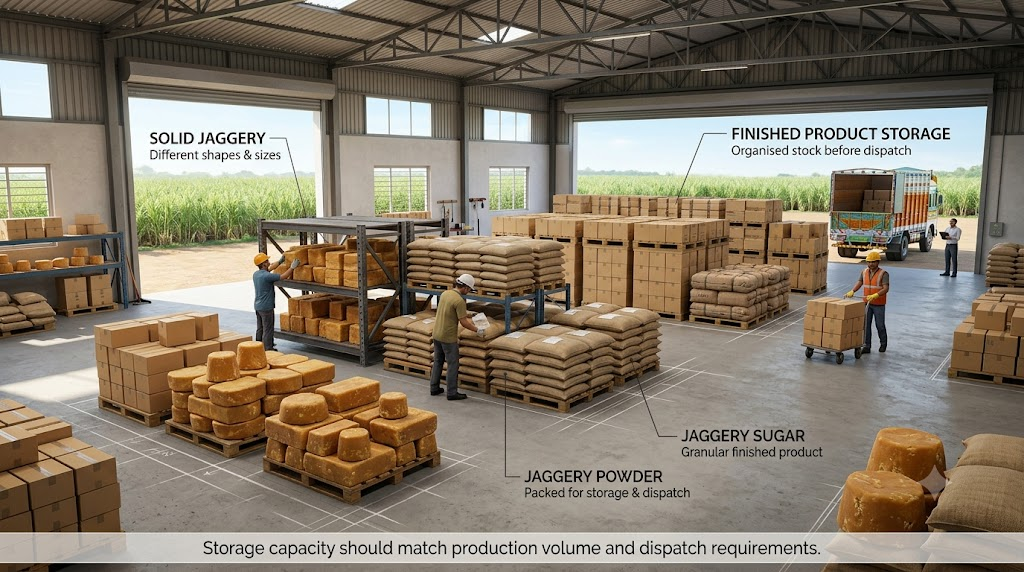
A plant producing larger quantities should therefore plan storage capacity along with production capacity.
6. Packing and Handling Area
If the project includes packing or value-added jaggery products, additional space may be required for packing, weighing, material handling and finished-product movement.
Also keeping the packing and dispatch area organised can make the movement of finished products easier.
Why Jaggery Plant Layout Matters
A good jaggery plant layout should make the movement of materials as simple as possible.
Moreover plant should ideally follow a logical flow:
Raw Material → Processing → Finished Product → Storage → Dispatch
A well-planned layout can help with:
- Easier sugarcane movement
- Better material flow
- Reduced unnecessary handling
- Easier machinery maintenance
- Better worker movement
- Efficient bagasse handling
- Easier finished-product dispatch
- Future expansion planning
The layout should also consider access for vehicles and maintenance personnel rather than focusing only on the machinery footprint.
Manpower Requirements for a Jaggery Plant
The manpower requirements for a jaggery plant depend on several factors, including plant capacity, automation level and the activities carried out at the facility.
Traditional jaggery production can require significant manual involvement. Modern automated plants, on the other hand, can reduce routine manual intervention by automating several stages of production.
Typical manpower requirements may include:
- Plant operators
- Electrical and mechanical maintenance personnel
- Production supervision
- Quality monitoring
- Packing and handling workers
- Loading and unloading workers
- General helpers
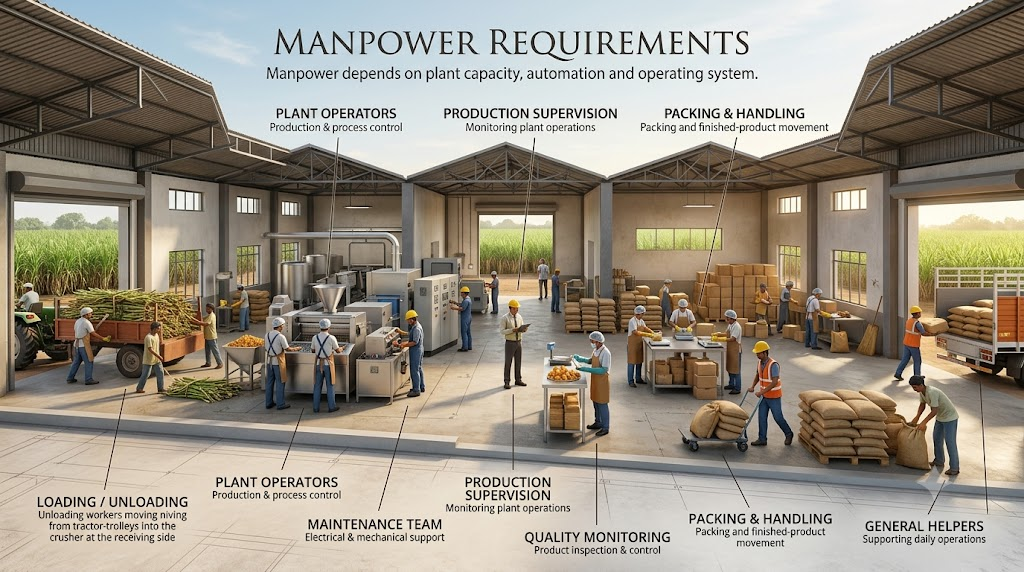
Not every project will require the same number of people. The final manpower requirement should be determined according to the plant size, automation, product range and operating system.
How Automation Affects Manpower
Automation can reduce the amount of routine manual work involved in jaggery production.
In an automatic jaggery plant, several processing and material-handling operations can be integrated into the plant system. This allows operators to monitor the process rather than manually perform every production stage.
However, automation does not mean that manpower is completely eliminated.
Trained operators are still important for:
- Monitoring plant operation
- Checking process parameters
- Handling operational requirements
- Basic troubleshooting
- Cleaning and routine activities
- Maintenance coordination
- Quality monitoring
According to Devanhaar Technologies’ current website FAQ, its jaggery plants generally require 2–4 workers for operation depending on plant size, with staff training provided for operation and maintenance.
Plan Infrastructure According to Plant Capacity
Plant capacity should be considered before finalising land and infrastructure.
For example, a small jaggery plant and a large commercial plant will have different requirements for:
- Sugarcane handling
- Processing equipment
- Bagasse movement
- Storage
- Utilities
- Vehicle movement
- Manpower
- Future expansion
This is why plant planning should consider the complete project rather than selecting machinery first and trying to fit everything into the available space later.
What Should You Plan Before Installation?
Before setting up a jaggery processing plant, evaluate the following:
1. Plant capacity
Determine the required cane-processing capacity based on realistic sugarcane availability.
2. Land and layout
Plan space for machinery, raw material, finished products, utilities and vehicle movement.
3. Sugarcane movement
Consider how cane will enter the plant and move towards the processing section.
4. Utilities
Plan the required water, electrical and steam-generation arrangements according to the plant design.
5. Storage
Estimate the space required for bagasse, finished jaggery and packing materials.
6. Manpower
Determine the number and type of workers required based on plant capacity and automation.
7. Future expansion
If expansion is part of the long-term plan, consider it while designing the initial layout.
Why You Should Plan Before Investing
Land, infrastructure and manpower are connected to the way the plant will operate.
A suitable plant layout can make raw-material handling, production, maintenance and dispatch more organised. Similarly, the right level of automation can reduce routine manual work while keeping trained personnel available for monitoring and maintenance.
Therefore, complete your site and manpower planning before finalising the plant capacity and installation requirements.
Devanhaar Technologies: Automatic Jaggery Plant Solutions
Devanhaar Technologies provides automatic jaggery plant solutions from 10 TCD to 500 TCD. The company states that its plants can be planned according to the customer’s production requirements, available space and project needs.
The company also provides plant installation, commissioning and operator training as part of its project support.
Secondly, if you are planning a new jaggery processing plant, therefore, evaluate your sugarcane availability, plant capacity, land, infrastructure and manpower together before starting the project.
Conclusion
However, setting up a jaggery plant requires more than selecting processing machinery.
You need to plan:
Land → Layout → Infrastructure → Utilities → Manpower → Production
By planning these elements together, you can design the plant more efficiently around the project’s actual requirements.
Plan the land. Plan the infrastructure. Plan the manpower. Then plan the plant.