


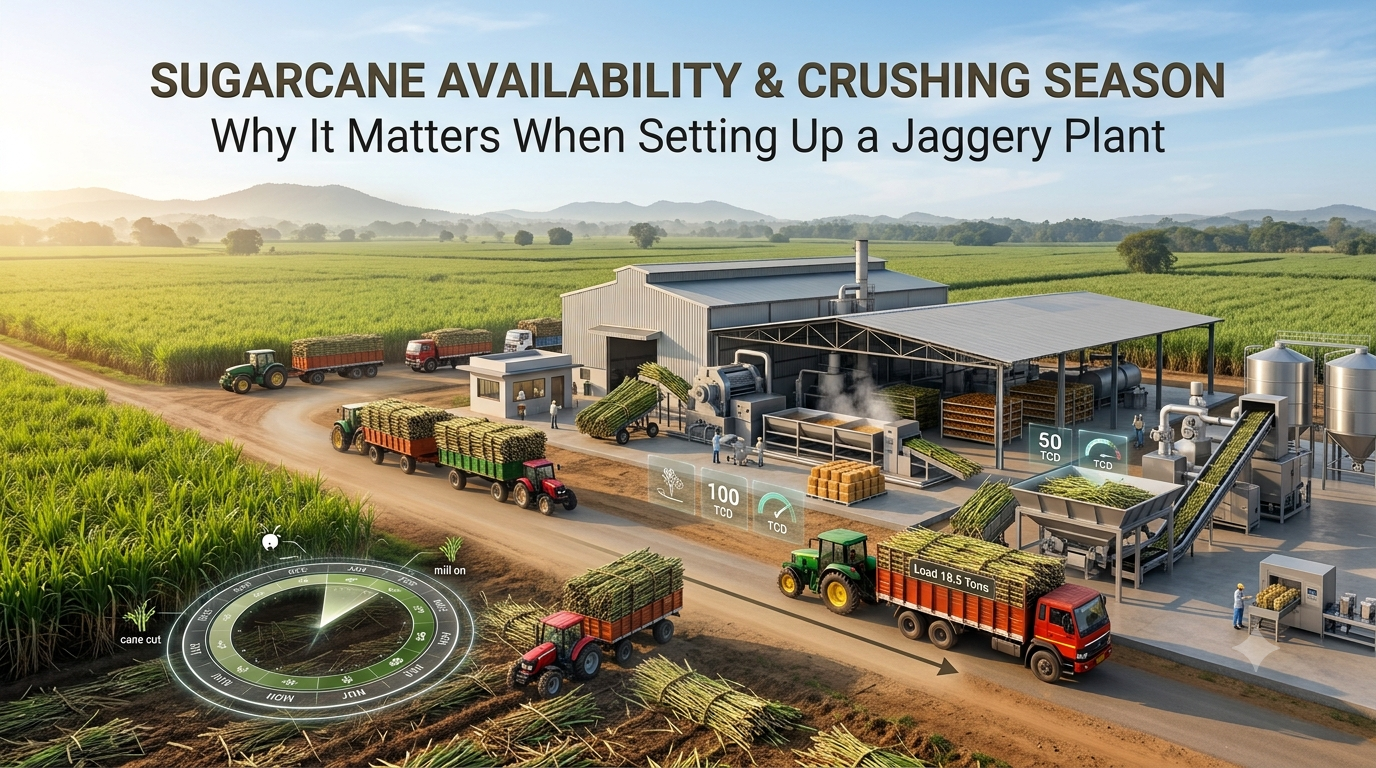
A jaggery plant can only perform as well as the sugarcane supply supporting it.
For anyone planning a jaggery processing unit, two questions should come before deciding the plant capacity:
How much sugarcane will be available, and for how many days can the plant operate?
What is the Sugarcane Crushing Season?
These factors directly influence the practical utilisation of the plant and should be assessed before finalising its capacity. The sugarcane crushing period is equally important, as it determines how long the plant can operate with a consistent supply of cane.
Sugarcane Availability Comes First
Plant capacity should be based on the realistic availability of sugarcane, rather than simply choosing a larger capacity for higher production.
Suppose a project can reliably source around 30 tonnes of sugarcane per day. Installing a much larger plant without securing additional cane may leave part of the plant’s capacity unused.
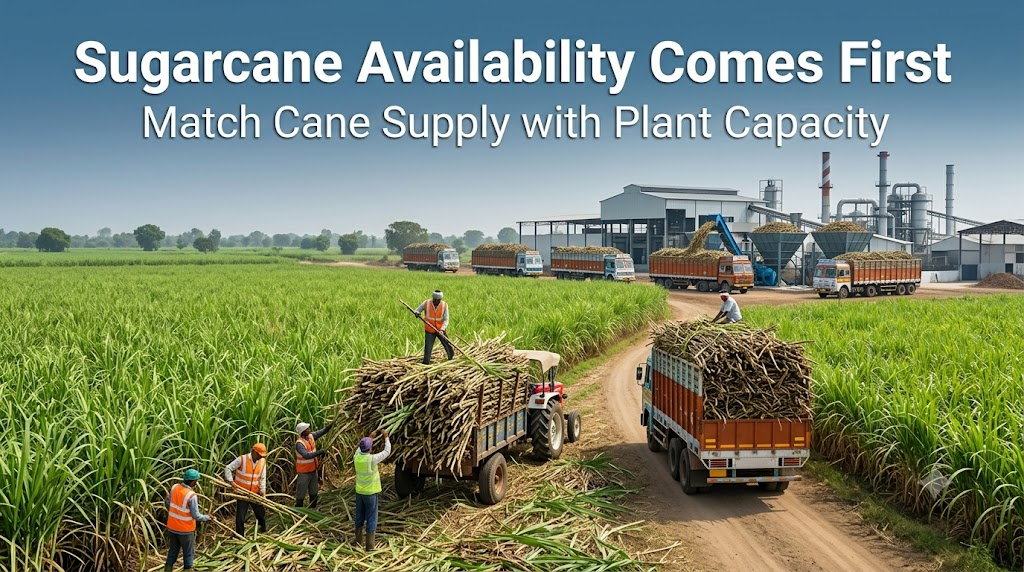
On the other hand, if sufficient cane is available from your own farms, nearby farmers, FPOs, cooperatives or contracted suppliers, a higher-capacity plant may be considered.
The key is to match daily cane availability with the planned crushing capacity.
Understanding the Crushing Season
Sugarcane is a seasonal crop, and its harvesting period varies by region, climate, variety and agricultural practices.
A jaggery plant therefore needs to be planned around the period when cane can be consistently sourced.
For example, a plant may have the technical capacity to process 100 tonnes of cane per day, but that does not mean it will process 100 tonnes every day throughout the year.
The number of operating days is just as important as the daily capacity.
A Simple Calculation
If a plant processes:
50 tonnes of cane/day × 120 operating days = 6,000 tonnes of cane
This gives a more realistic picture of the seasonal raw-material requirement than looking at the TCD figure alone.
What Happens When Cane Supply Is Inconsistent?
Irregular cane availability can affect plant utilisation.
If the plant is ready to operate but sufficient sugarcane is not available, the machinery may remain underutilised. This is why one should complete raw-material planning before investing in plant capacity.
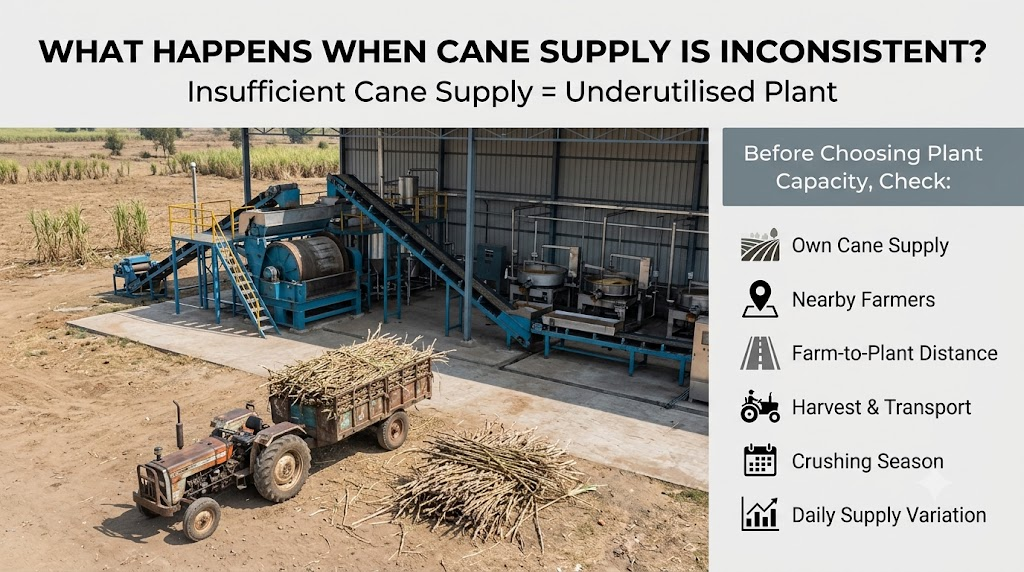
A practical assessment should include:
- Sugarcane available from your own land
- Expected procurement from nearby farmers
- Distance from farms to the plant
- Harvesting and transportation arrangements
- Expected length of the crushing season
- Possible variation in daily cane supply
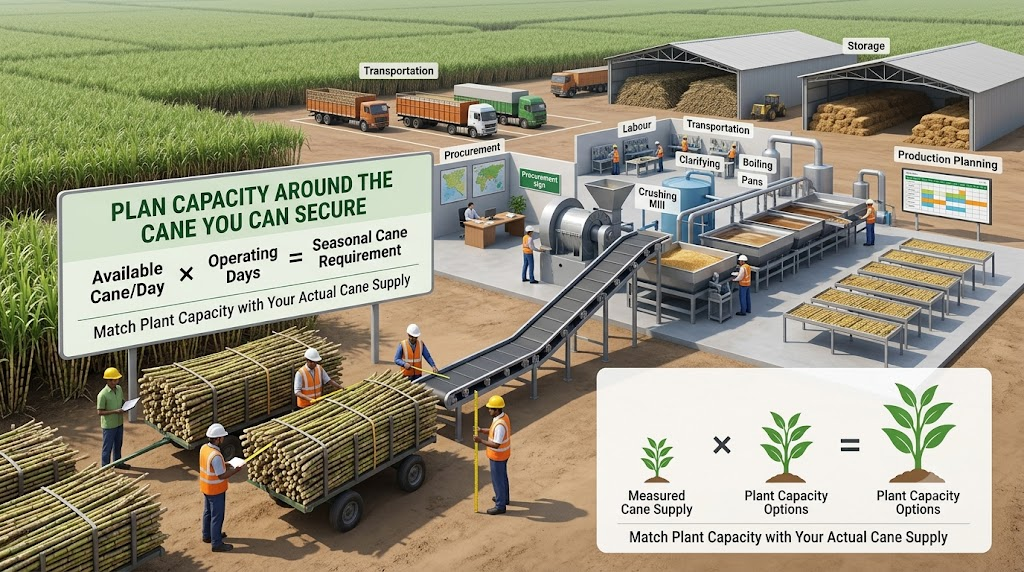
Plan Capacity Around the Cane You Can Secure
A good plant plan starts with the raw material, not the machinery.
Before selecting a 10, 30, 50, 100 TCD or larger plant, estimate:
Available cane per day × Expected operating days = Seasonal cane requirement
This helps determine whether the proposed plant capacity is aligned with the actual supply chain.
It also helps in planning procurement, labour, transportation, storage and production targets.
Build a Reliable Cane Supply Network
For commercial-scale jaggery production, depending on a single source of sugarcane can create unnecessary supply risk.
A stronger approach can involve sourcing cane through multiple channels, such as:
Own cultivation + Local farmers + FPOs/cooperatives + Contracted supply
The exact model will depend on the location and scale of the project.
Location Matters Too
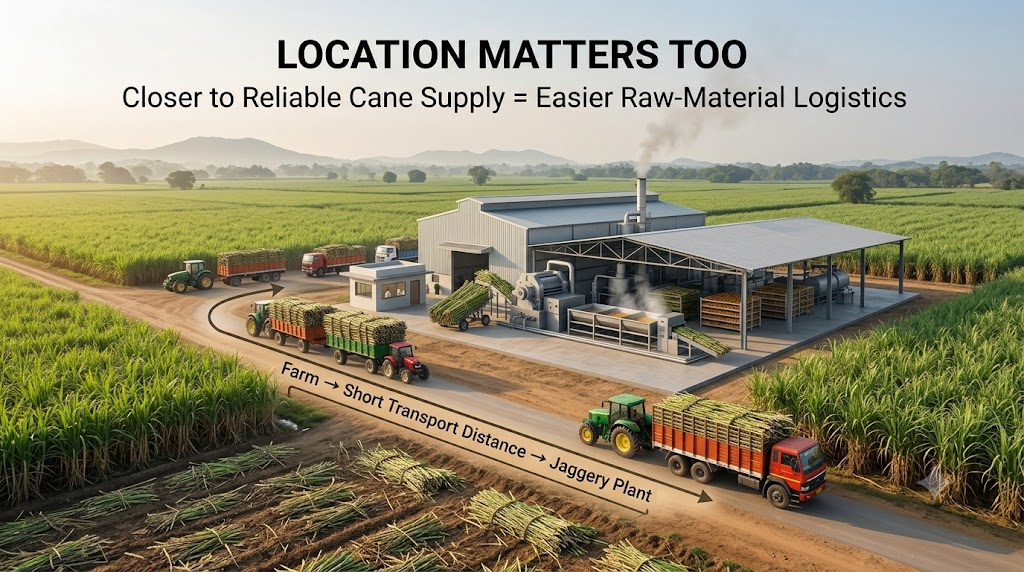
The distance between the sugarcane-growing area and the jaggery plant is another important consideration.
Sugarcane is bulky and transportation adds to the logistics involved in processing. A plant located closer to reliable cane-producing areas can make raw-material movement more manageable.
Therefore, when evaluating a plant location, consider not only land and infrastructure but also where the sugarcane will come from.
The Bottom Line
Selecting a jaggery plant capacity is not simply about choosing the number of tonnes you want to process in a day.
It is about understanding:
How much cane can I source?
How consistently can I source it?
How long will the crushing season last?
Once these questions are answered, the appropriate plant capacity and operating plan can be evaluated more realistically.
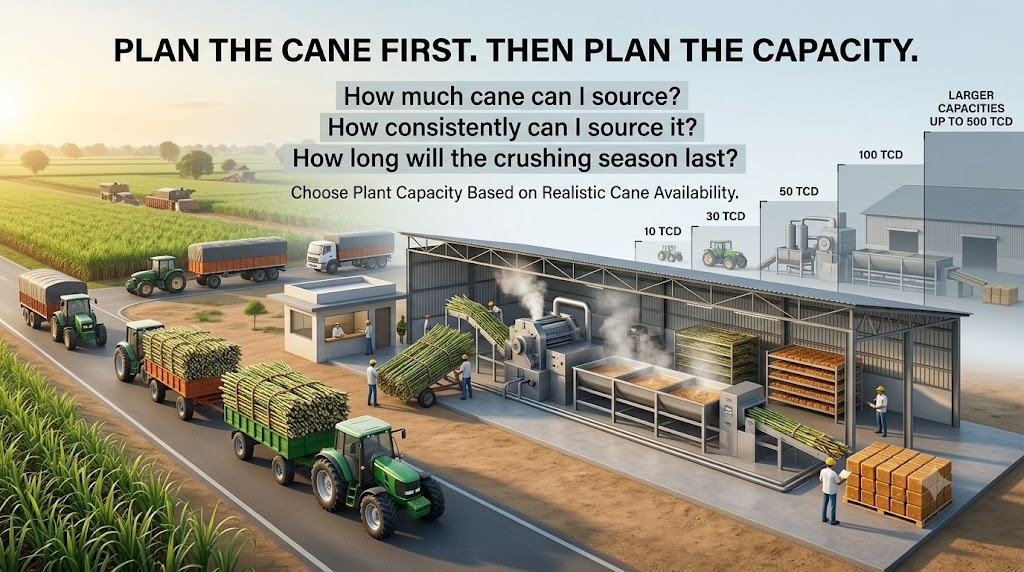
At Devanhaar Technologies Pvt. Ltd., jaggery processing plants are available from 10 TCD to 500 TCD. Plant capacity can be planned according to the project’s sugarcane availability, operating requirements and production objectives.
Plan the cane first. Then plan the capacity.