



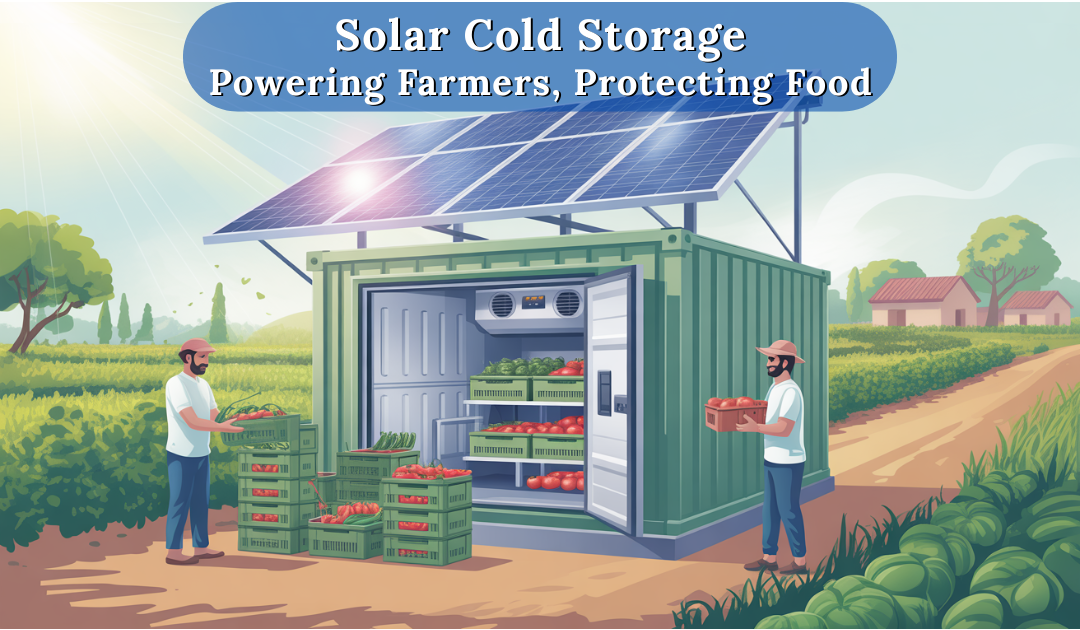
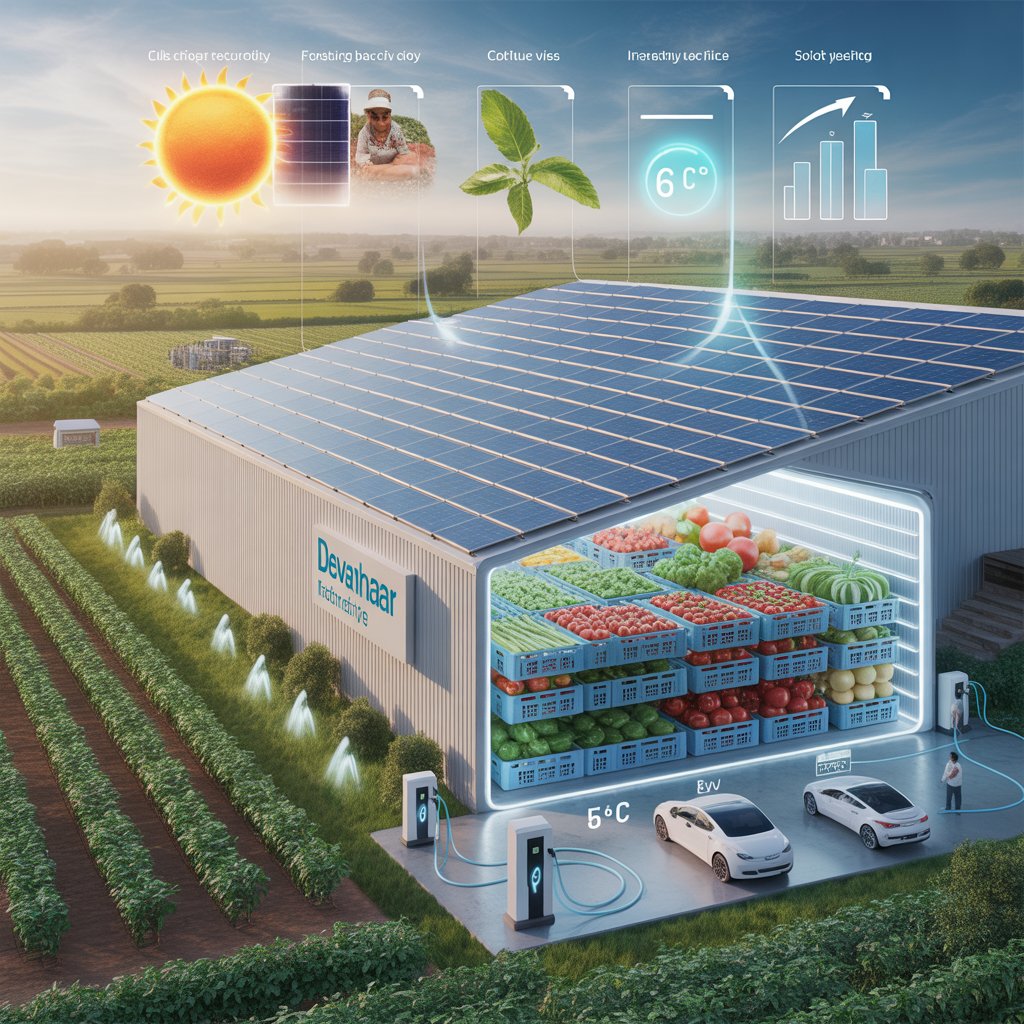
Solar Cold Storage is a game changer for farmers dealing with unreliable grids and high energy costs, as it uses photovoltaic panels to power off-grid refrigeration units and preserve perishable produce at farmgates. Countries increasingly rely on this technology to reduce post-harvest losses, strengthen rural economies, and achieve food security in the face of climate challenges, especially in solar-rich developing regions like sub-Saharan Africa and India. Solar-powered systems fill important gaps in conventional cold chains by lowering waste and opening up markets, promoting smallholders’ independence and the resilience of the country’s agriculture.
Empowering Farmers with Affordable Preservation
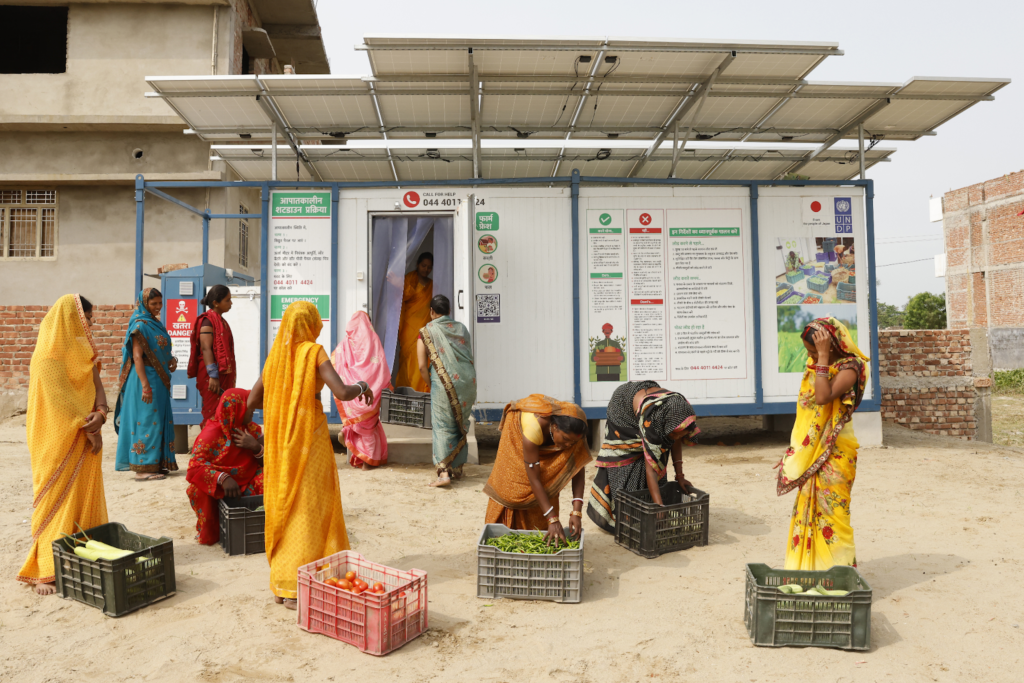
In emerging economies, 80–90% of food is produced by smallholders, who mainly rely on solar cold storage to increase shelf life without being dependent on the grid. These 5-10 tonne units can store vegetables such as tomatoes, chillies, and fruits for weeks, reducing losses from 20-40% to less than 10% by keeping temperatures between 0 and 10°C off the grid. In India, Farmer Producer Organisations (FPOs) lease or share facilities on a pay-per-use basis (e.g., ₹10 per 50 kg crate), enabling marginal farmers to store produce confidently, sell at peak prices, and diversify income.
This shift eliminates long hauls to distant warehouses, cutting transport costs by 30-50% and diesel use. Additionally, subsidies under schemes like MIDH and RKVY cover up to 75% of the ₹12-15 lakh setup costs. As demonstrated by Andhra Pradesh chilli growers who achieve 70–80% facility utilisation and turn distress sales into profitable off-season trade, farmers report 2-4x income gains.
National Economic and Food Security Benefits

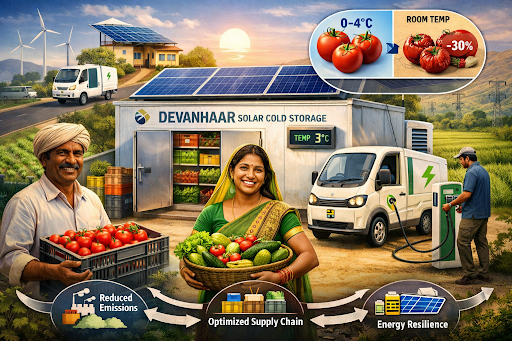
Countries rely on solar cold storage to stabilise prices and exports by reducing yearly losses of billions of rupees, such as India’s ₹92,651 crore in horticultural waste. By integrating cold rooms to support 1.5 lakh farmers per project wave, government initiatives like PM-KUSUM aim to achieve 34 GW of solar capacity by 2026, increasing the GDP contributions from agriculture (15–20% in many countries). In regions with erratic power, these systems ensure year-round supply, reducing dependency on imports and food inflation during gluts or droughts.
In line with net-zero objectives, they replace diesel generators in order to cut 8–10% of the world’s emissions from food waste. Through public-private partnerships, nations like Kenya and Indonesia expand, deploying more than 1,000 units to support 37 million people’s livelihoods through diverse solar agritech.
Key Advantages Driving Adoption
Solar cold storage offers multifaceted benefits that deepen dependency:
Energy Independence: Operates 24/7 with battery backups, resilient to outages in rural areas.
Cost Efficiency: Zero electricity bills post-setup; ROI in 3-5 years via waste reduction.
Scalability: Modular designs suit FPOs, storing 30+ crop varieties with AI-optimised temperatures.
Sustainability: lowers GHG emissions, supporting climate-adaptive farming.
| Feature | Traditional Grid/Diesel | Solar Cold Storage |
| Operational Cost | High (25-50% of expenses) | Near-zero after install |
| Post-Harvest Loss | 20-40% | <10% |
| Accessibility | Urban-centric | Farmgate/off-grid |
| Environmental Impact | High emissions | Renewable, low-carbon |
Challenges and Scaling Pathways
Despite benefits, reach is limited by high upfront costs and awareness gaps; however, financing from development banks and declining solar prices—which have dropped by 80% in ten years—help. To scale nationally, nations must give priority to rural credit, policy alignment, and pilots like EESL’s 5–10 MT units. Solar cold storage is becoming increasingly important for resilient agri-economies, ensuring that farmers and nations prosper in the face of global uncertainties, from Andhra Pradesh’s FPO models to FAO-backed small-scale fisheries.






Samiksha
January 18, 2026Solar Cold Storage costing ? Want to setup at my farm.
Aanchal Kaur
February 24, 2026Please share your contact details sir/mam at 9971002949.