


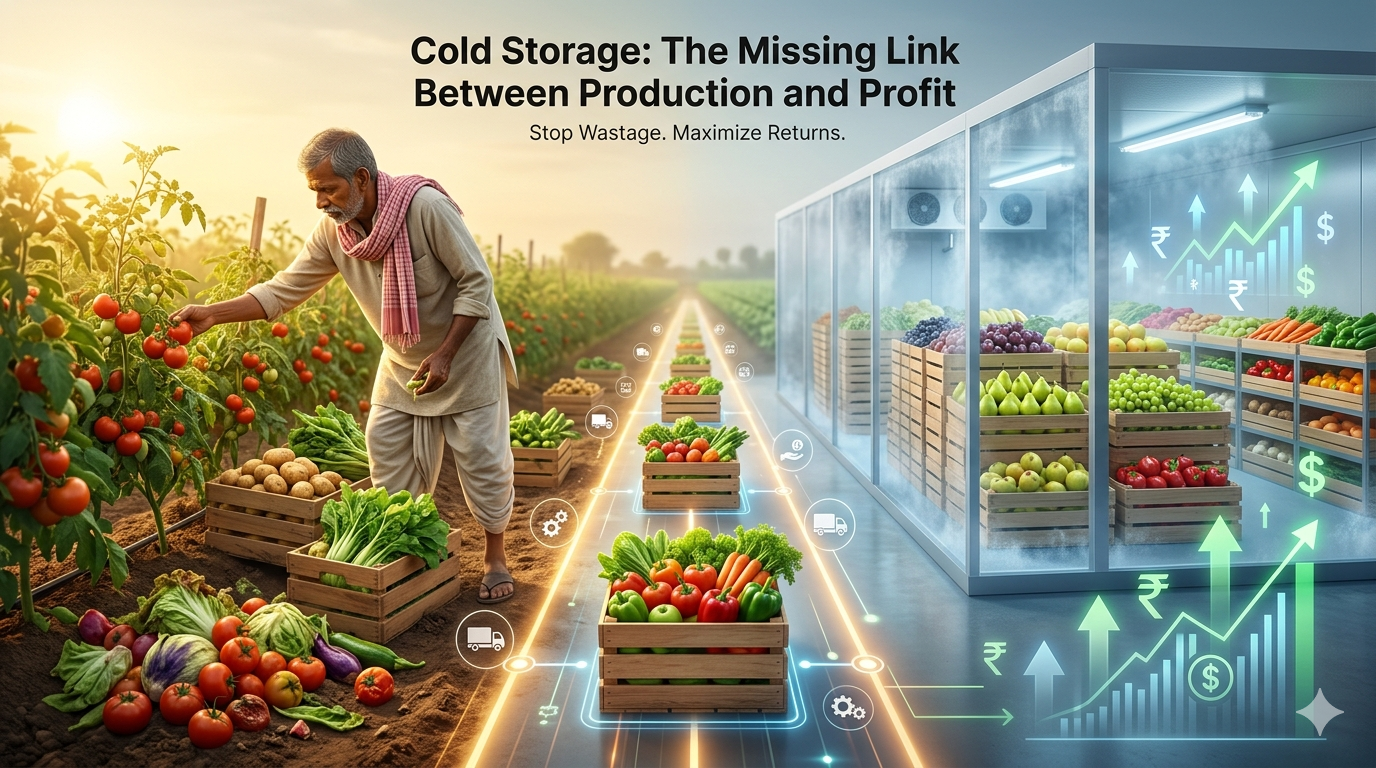
In today’s agricultural and food industries, increasing production is no longer the most pressing issue. Farmers and businesses are producing more than ever before thanks to improved farming techniques, seed technology, and modern equipment. However, even with this growth, a major problem that affects profits is still present: poor management after harvest. This is where cold storage for agriculture profit plays a crucial role, helping bridge the gap between production and profitability.
A lot of fruits and vegetables go bad or are sold for less money because they aren’t stored or timed properly, not because they are bad quality. Cold storage is essential in bridging the gap between production and profitability.
Cold storage is more than just an infrastructure facility; it is an essential link that determines whether produce generates maximum value or minimum returns.
Understanding the Real Role of Cold Storage
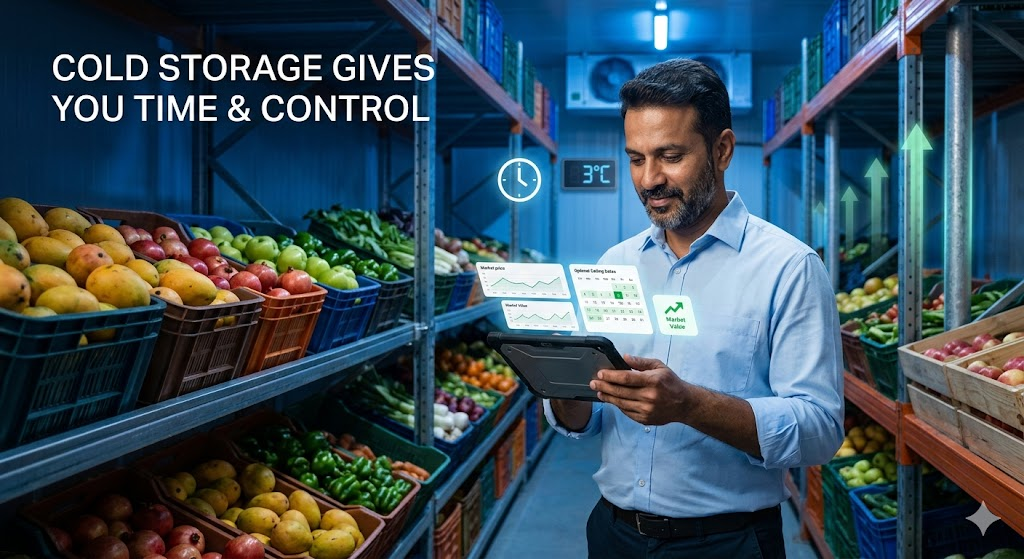
People usually think of cold storage as a place where perishable goods can be kept at low temperatures to keep them from going bad. While this definition is correct, it only explains a small part of its importance.
In reality, cold storage offers businesses something far more valuable: time and control.
It allows producers, traders, and businesses to:
- Store goods safely after harvest
- Avoid immediate selling under pressure
- Plan sales based on market conditions
- Maintain consistent quality over time
The ability to maintain inventory without sacrificing quality alters the way businesses operate. Instead of reacting to the market, they can start planning their approach strategically.
The Core Problem: Why Farmers Lose Profit
One of the biggest reasons behind low profitability in agriculture is forced selling.
Without access to storage, farmers and traders have no option but to sell their produce immediately after harvest. This creates several challenges:
- Markets get flooded during peak season
- Prices drop due to excess supply
- Farmers have little to no bargaining power
- Middlemen take advantage of urgency
As a result, even high-quality produce often gets sold at prices that barely cover the cost of production.
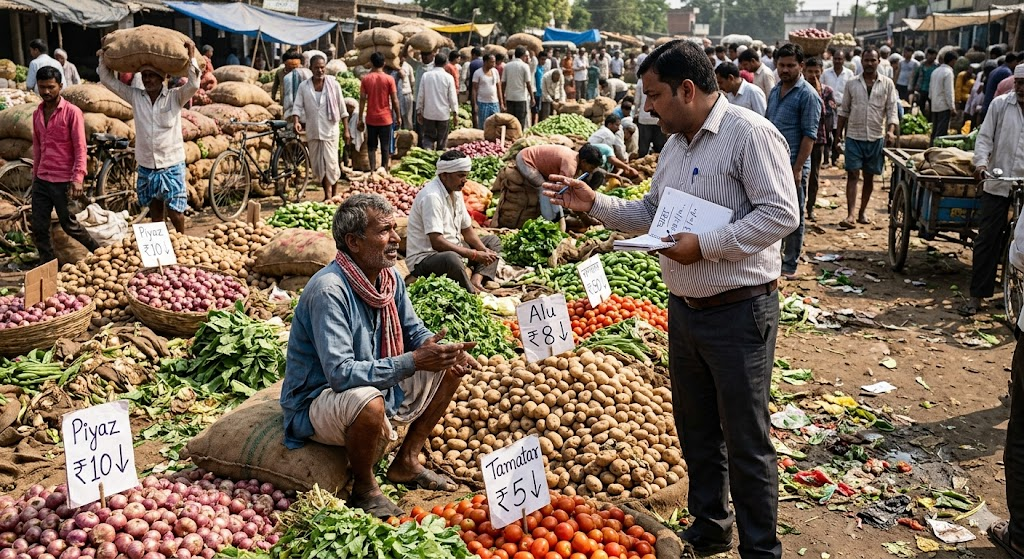
In many cases, a portion of the produce is not sold at all and ends up getting wasted. This not only impacts income but also discourages investment in better farming practices.
From Compulsion to Control: A Major Business Shift
The introduction of cold storage for agriculture profit changes the entire equation.
Instead of selling under pressure, businesses gain the freedom to decide:
- When to sell
- Where to sell
- At what price to sell
This shift from compulsion to control is what makes cold storage a powerful business tool.
For example, when produce is stored properly, it can be sold during periods of higher demand, when prices are naturally better. This simple change in timing can significantly increase profit margins without increasing production.
Over time, this approach helps businesses move from survival-based selling to profit-driven decision-making.
Expanding Market Opportunities
Another major advantage of cold storage is the ability to access better markets.
Without storage, businesses are usually limited to nearby mandis or local buyers due to time constraints. However, with proper storage in place, they can:
- Explore distant markets with higher demand
- Supply to organized retailers and supermarkets
- Work with exporters and bulk buyers
- Maintain consistent supply for long-term contracts
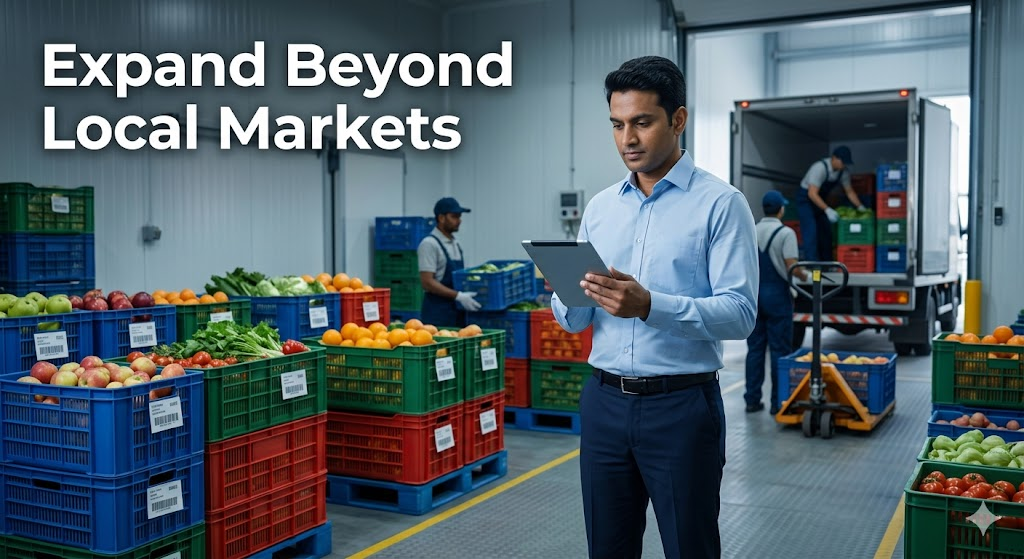
This not only improves pricing but also enhances credibility and business reputation.
Cold storage, therefore, becomes a gateway to larger and more profitable opportunities.
Reducing Losses and Increasing Efficiency
Post-harvest losses are one of the most overlooked issues in the agricultural sector. A considerable percentage of produce is wasted every year due to improper handling, transportation delays, and lack of storage.
Cold storage directly addresses this problem by:
- Slowing down spoilage
- Preserving freshness and quality
- Extending shelf life
- Reducing unnecessary waste
By minimising losses, businesses are able to maximise the value of what they already produce, making operations more efficient and sustainable.
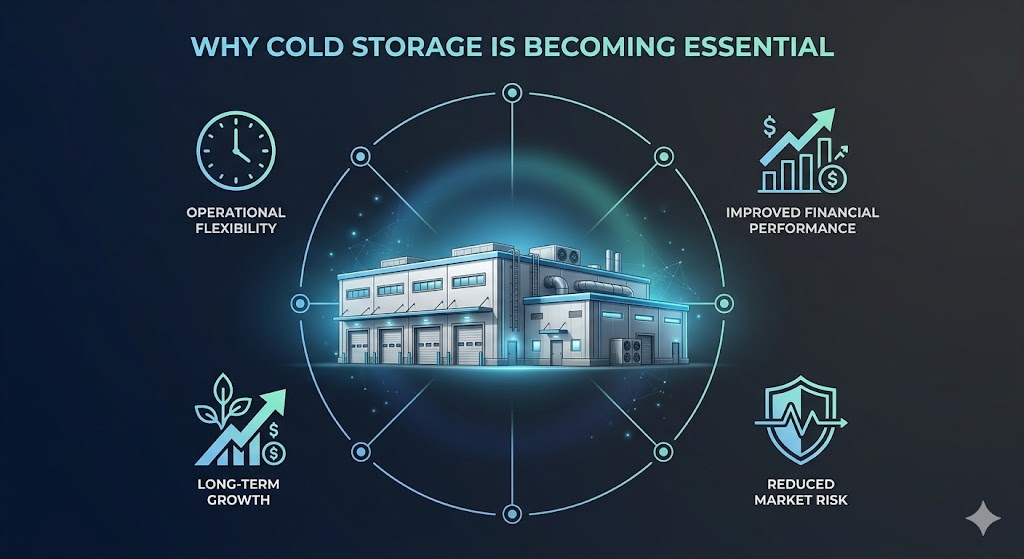
Why Cold Storage is Becoming Essential
In today’s competitive environment, relying only on production is no longer enough. Businesses must focus on optimising every stage of the value chain, especially post-harvest management.
Cold storage is becoming essential because it:
- Provides flexibility in operations
- Improves financial outcomes
- Reduces dependency on market fluctuations
- Supports long-term growth
It is no longer just a support system—it is a core component of a successful agri- or food business.
Conclusion
Cold storage fills one of the most critical gaps in the agricultural and food supply chain. It connects production with profitability by offering control, flexibility, and efficiency. Businesses that invest in proper storage solutions are better equipped to handle market uncertainties, reduce losses, and improve their overall performance.
As the industry continues to evolve, adopting cold storage is not just a smart choice—it is a necessary step toward building a more stable and profitable future.