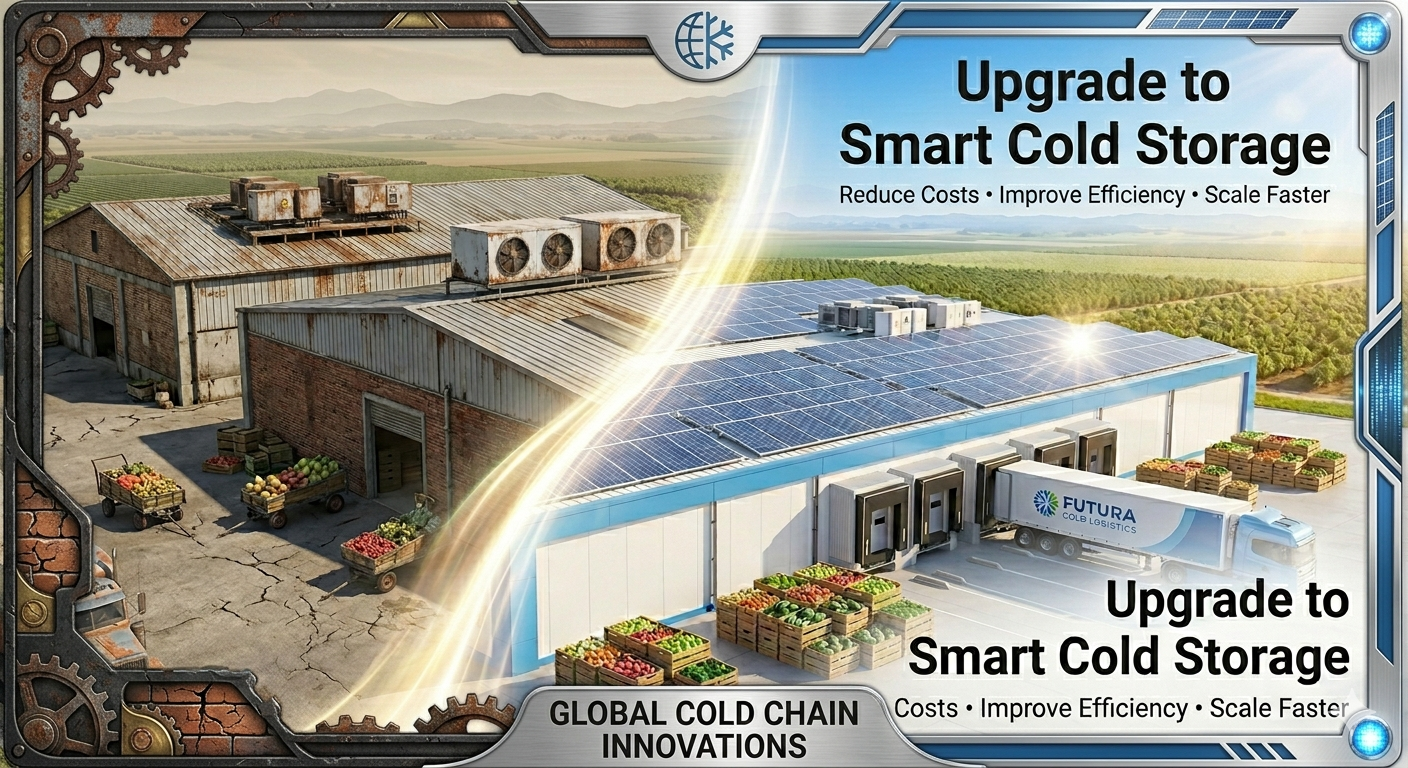



India’s cold storage sector plays a crucial role in preserving agricultural produce, pharmaceuticals, and other perishable goods. However, it is also highly energy-intensive. With over 7,000 facilities operating across the country, these units consume substantial amounts of electricity annually. A large share of this electricity comes from coal-fired power plants, which generate approximately 0.8 to 1 kilogram of CO₂ per kilowatt-hour (kWh). This results in significant greenhouse gas emissions and a high carbon footprint.In addition to grid dependence, many facilities rely on diesel generators during power outages. Diesel-based electricity production emits approximately 0.7 to 1 kg of CO₂ per kWh, further increasing environmental impact. As a result, conventional cold storage infrastructure contributes heavily to climate change and air pollution.
Solar-powered cold storage systems offer a transformative pathway toward carbon emission reduction and decarbonization of the cold chain sector. By generating electricity on-site through solar panels, these systems produce zero direct emissions during daylight hours. Instead of depending on coal-based grids, solar installations harness clean and renewable energy, significantly lowering carbon intensity.
During peak sunlight hours, facilities can meet most or all of their cooling demands without emitting greenhouse gases, enabling substantial carbon footprint reduction and climate impact mitigation. This shift supports the broader low-carbon transition in infrastructure and industrial operations.
Modern systems also integrate advanced energy storage solutions or minimal grid backup to ensure reliable performance even in low-sunlight conditions. By reducing reliance on diesel generators and fossil-fuel-based electricity, these systems contribute to emission mitigation, sustainable energy adoption, and long-term environmental sustainability.
Overall, solar-powered cold storage represents a critical step toward a cleaner, more resilient, and environmentally responsible cold chain ecosystem in India.
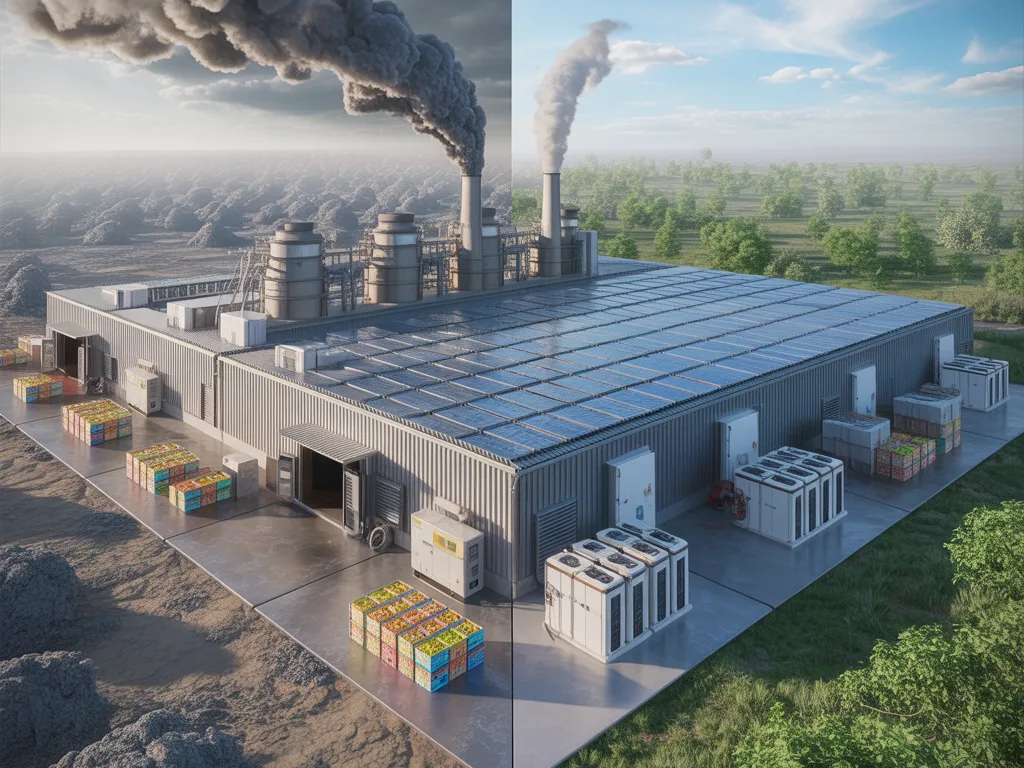
Companies such as Devanhaar Technologies have shown that solar-integrated cold storage systems can reduce emissions by 80 to 90 per cent compared to traditional setups. Consider a medium-sized 100-tonne cold storage unit to get a sense of the magnitude of the impact. A facility of this type may require between 200,000 and 300,000 kWh of electricity per year. Using coal-based grids and diesel backups can lead to annual CO₂ emissions of 160 to 300 tonnes.
In contrast, a solar-powered system can meet almost all of this demand through on-site renewable generation. In some cases, facilities generate excess electricity that can be exported back to the grid, further promoting clean energy adoption.
| Aspect | Traditional Cold Storage | Solar Cold Storage (Devanhaar) |
|---|---|---|
| Primary Energy Source | Coal grid (0.8 kg CO₂/kWh) or diesel (0.7 kg CO₂/kWh) | Solar PV (0 g CO₂/kWh operational) |
| Backup Reliability | Frequent failures during outages | Up to 10 days continuous operation |
| Total Emission Impact | 200-500 tonnes CO₂/year per 100 MT unit | 80-90% lower (20-50 tonnes lifecycle) |
| Refrigerant Type | HFCs (high GWP) | Low-GWP natural gases |
| Crop Suitability | Broad, but inconsistent | Optimized for vegetables & fruits |
| Maintenance Emissions | Fuel transport & repairs | Minimal (panel cleaning only) |
Role of Natural Refrigerants in Reducing Indirect Carbon Emissions
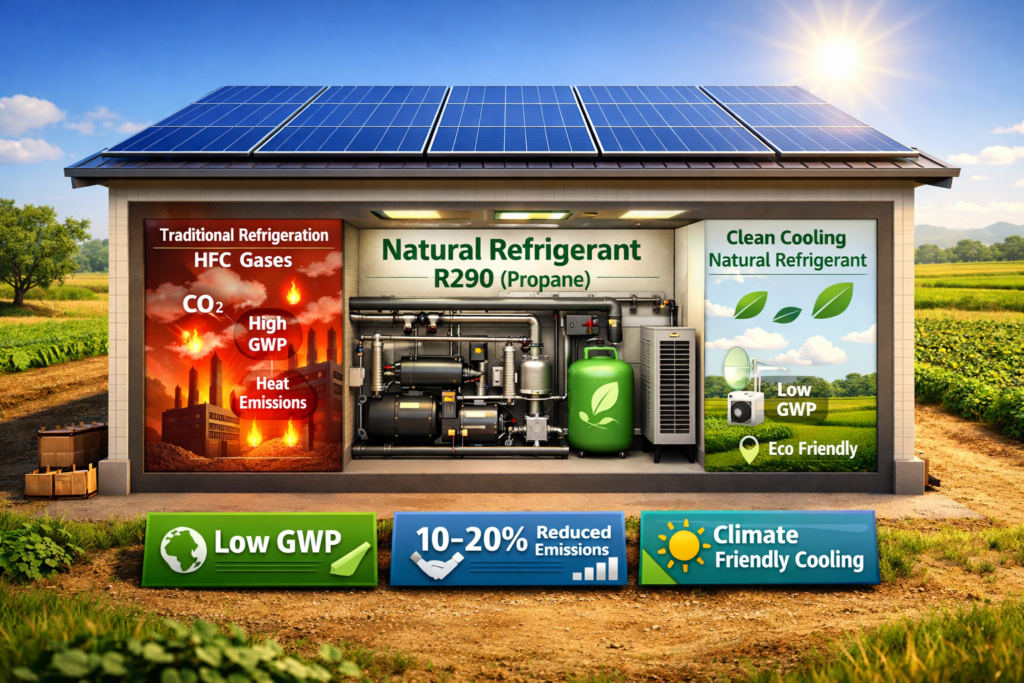
The utilisation of natural refrigerants is a crucial environmental benefit of solar cold storage. The global warming potential (GWP) of hydrofluorocarbons (HFCs), which are frequently more than 1,000 times that of CO₂, is a significant factor in conventional refrigeration systems. Significant harm to the climate can result from even tiny leaks of these refrigerants. Natural refrigerants, like R290 (propane), on the other hand, are much more environmentally friendly and have very little potential to cause global warming. Solar cold storage systems can cut indirect emissions by an additional 10 to 20 per cent by using natural refrigerants instead of high-GWP ones.
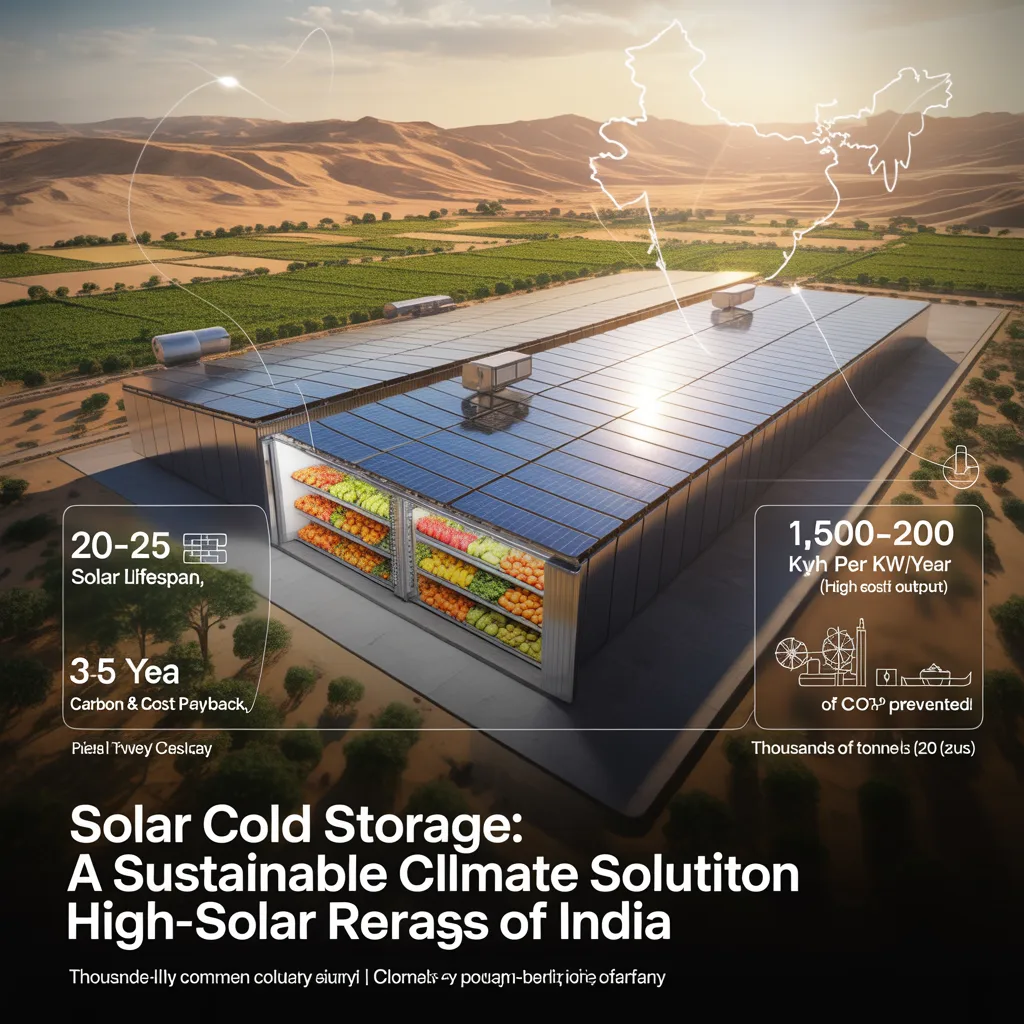
Lifecycle analyses of solar refrigeration technologies further support the environmental argument. Although the initial investment for solar infrastructure may be higher, most systems pay for themselves in terms of money and carbon emissions in three to five years. Since solar panels typically last 20 to 25 years, the long-term carbon savings are substantial and net positive. Over a 20-year period, a single mid-sized solar cold storage facility can prevent thousands of tonnes of CO₂ emissions.
Rajasthan and Gujarat, two of India’s high-solar regions, provide especially advantageous circumstances for the installation of solar cold storage. For every kilowatt (kW) of installed capacity, solar panels in these states can produce between 1,500 and 2,000 kWh per year. Since this output frequently surpasses the cooling requirements of numerous establishments, solar energy is not only a sustainable option but also a financially feasible one. Solar cold storage is a significant step towards lowering emissions, enhancing sustainability, and assisting India in achieving its climate goals by reducing reliance on fossil fuels and replacing them with renewable energy.