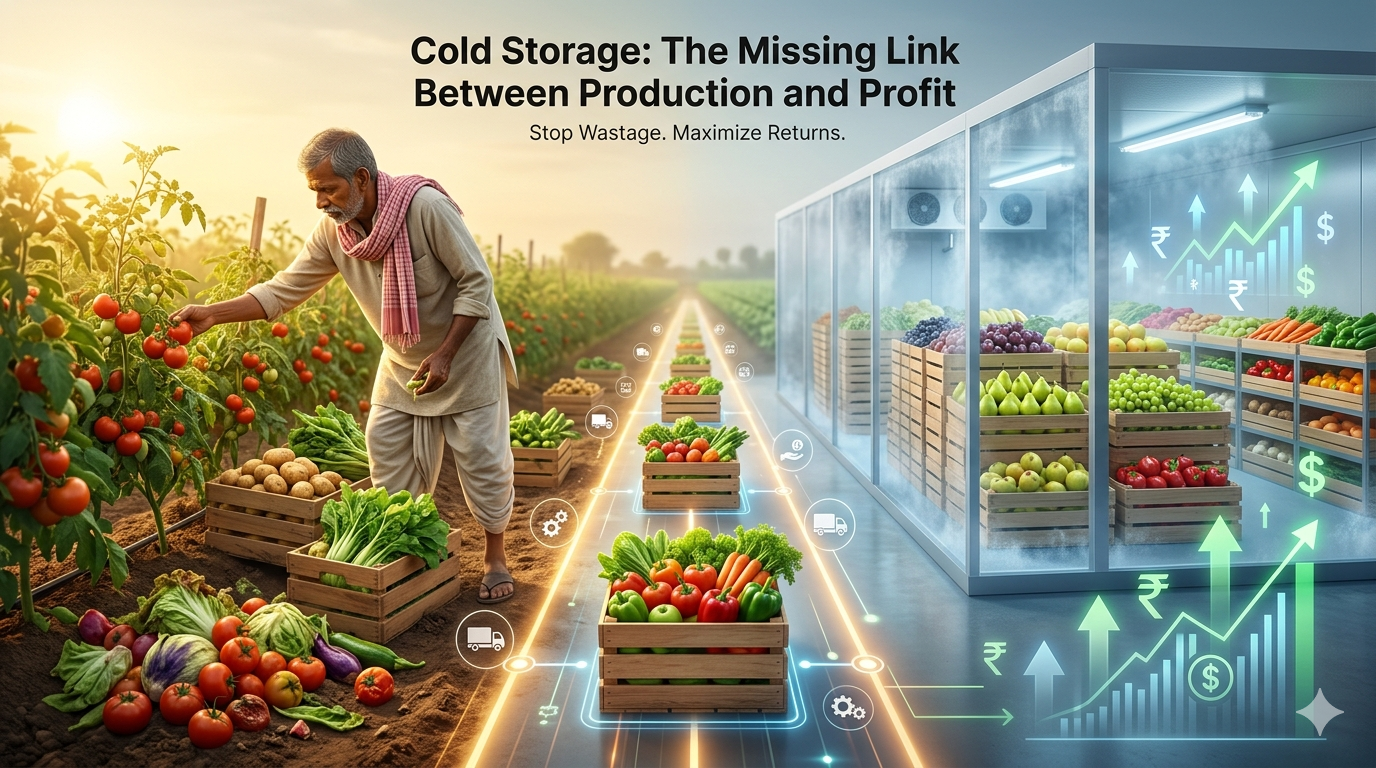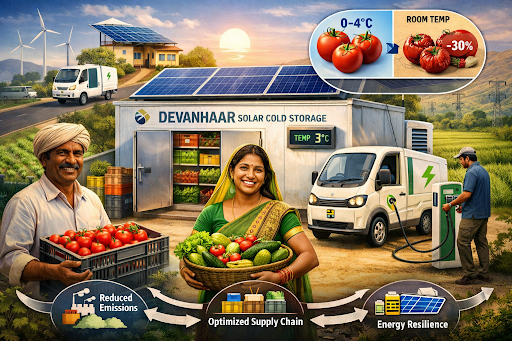



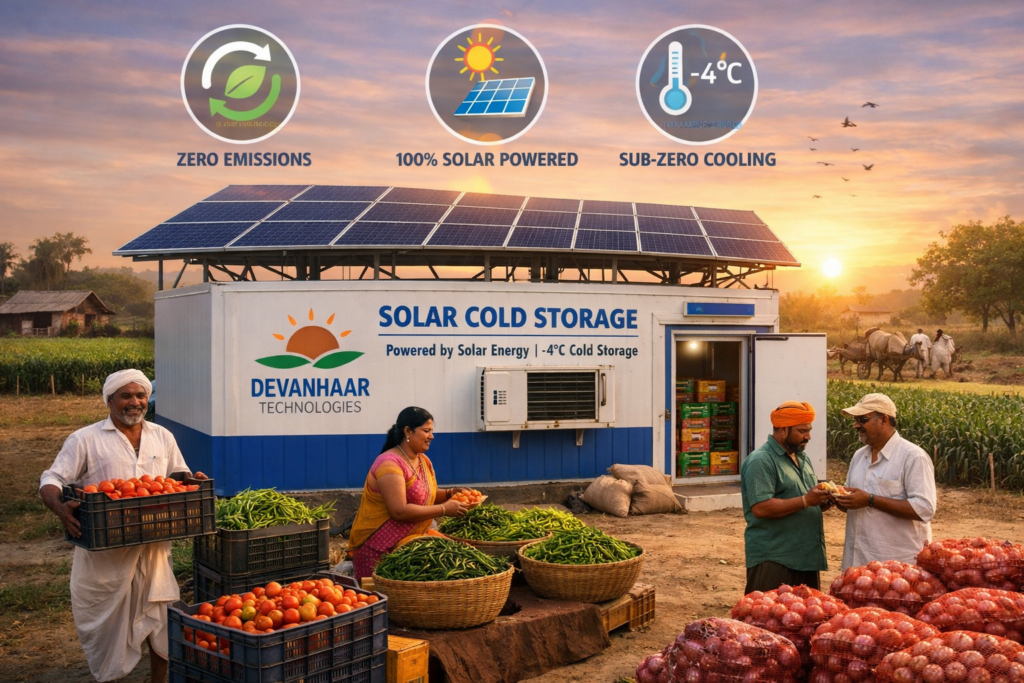
Post-harvest losses for fruits and vegetables exceed 20–30%—worth ₹1 lakh crore annually—in India’s vast rural landscapes, where agriculture supports millions of people. This is mostly because of insufficient cooling. Presenting Devanhaar Technologies‘ solar cold storage solutions, which use only solar energy to power refrigeration down to -4°C. These systems drastically reduce carbon emissions in the agricultural cold chain by doing away with reliance on diesel generators or erratic grid electricity. However, their influence extends beyond conservation; they establish solar cold storage as a necessary piece of rural infrastructure, enabling farmers to create value
From Basic Cooling to Reliable Rural Powerhouses
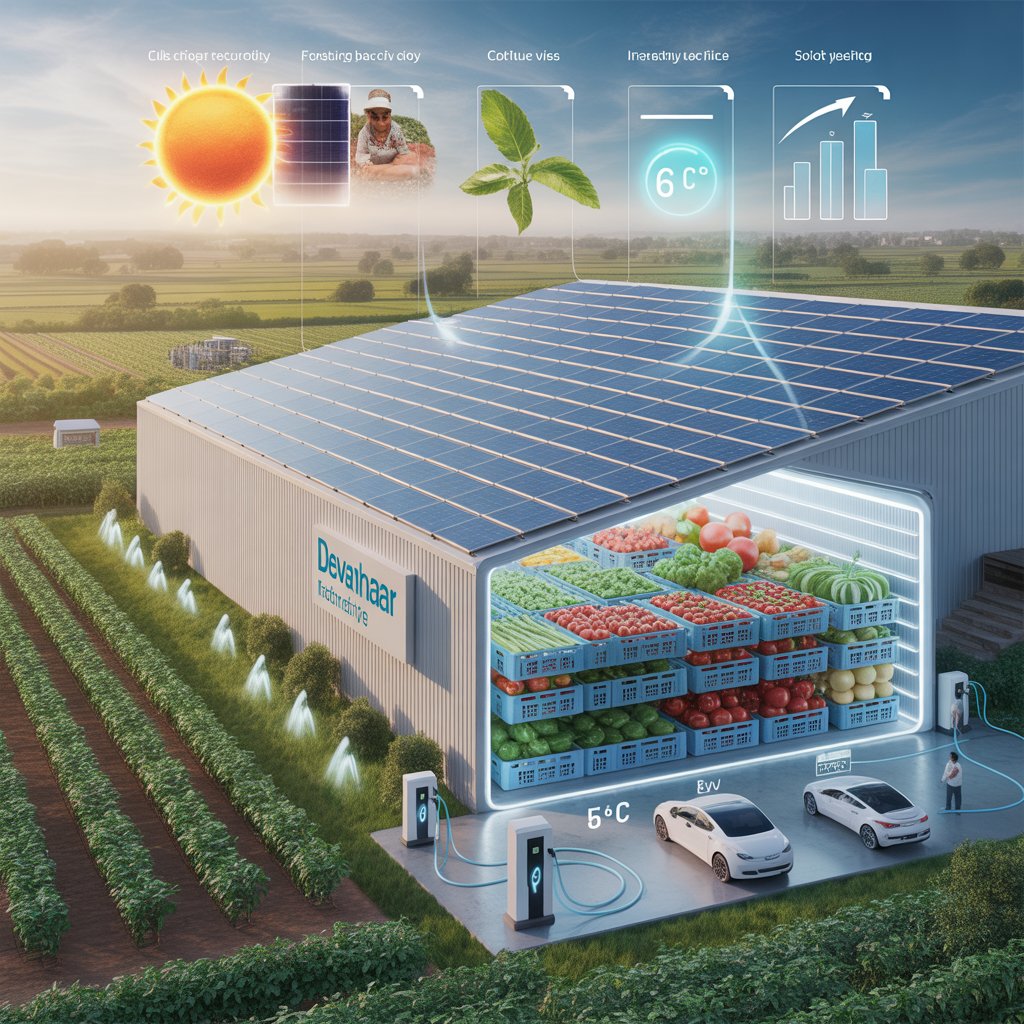
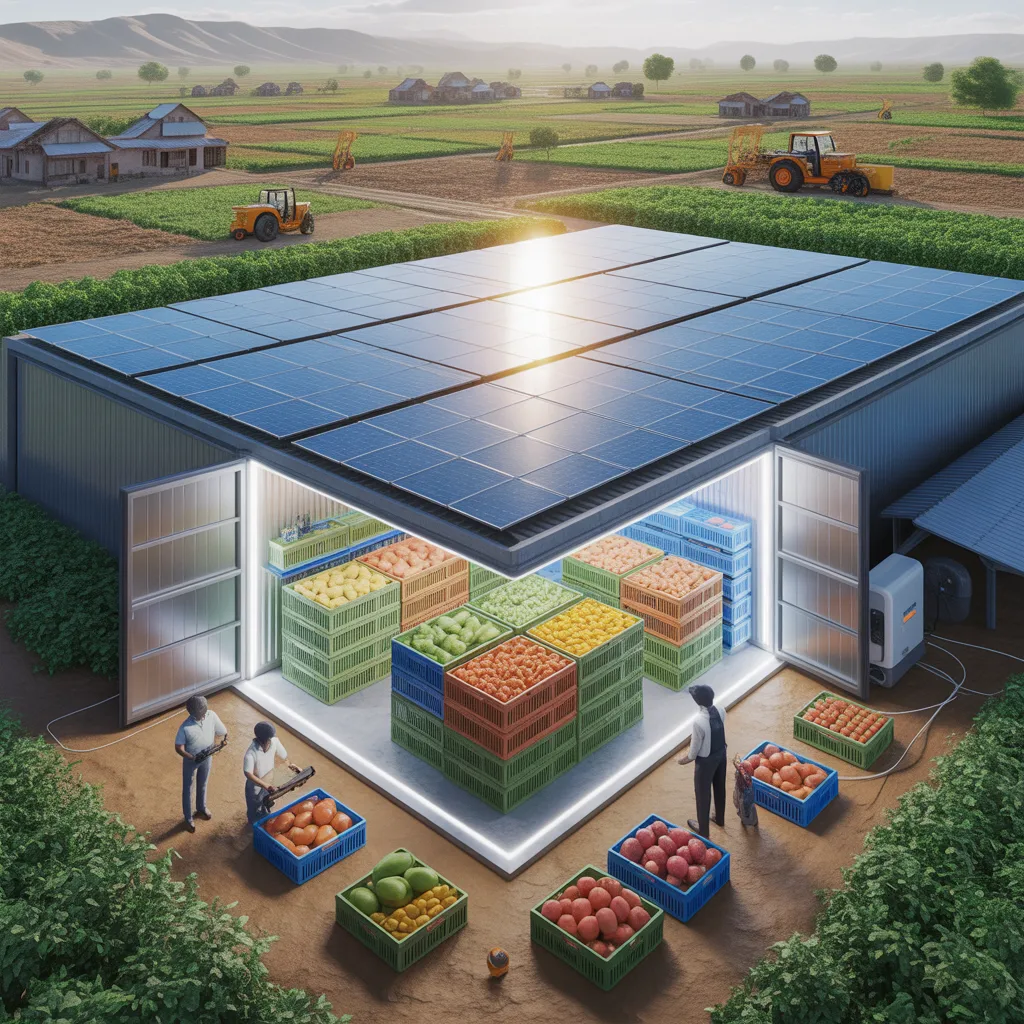
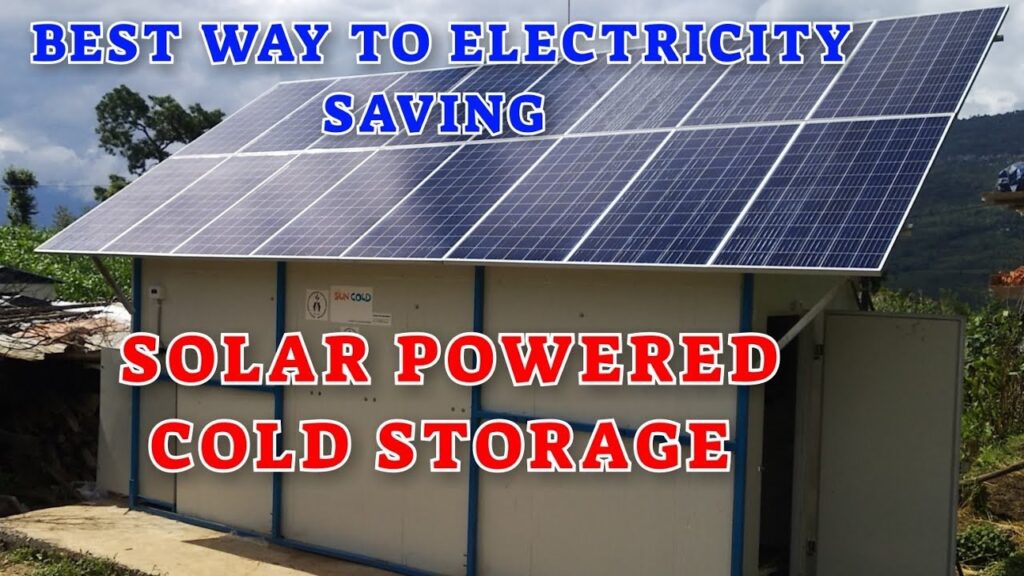
High-efficiency photovoltaic panels power DC compressors in thickly insulated polyurethane foam (PUF) enclosures in Devanhaar’s units, which range in size from 50–250 tonnes for on-site farm use to 500–2,000 tonnes for commercial operations. Utilising India’s plentiful sunlight (4–7 kWh/m² per day), they produce excess electricity despite unpredictable weather. In states like Uttar Pradesh and Bihar, where outages last longer than ten to fifteen hours every day, lithium-based batteries provide up to ten days of autonomy during cloudy conditions.
These units maintain 0–10°C with ideal humidity, making them ideal for fruits like apples and mangoes as well as vegetables like potatoes, onions, and tomatoes. This keeps food from spoiling quickly in ambient heat (30–40°C) and prolongs shelf life by up to 10 days. IoT integration turns remote farm sheds into intelligent, off-grid infrastructure by enabling remote monitoring, energy optimisation, and waste reduction.
Decarbonizing the Chain While Building Economic Resilience
Conventional cold storage uses diesel (0.7 kg CO₂/kWh) or coal grid power (0.8-1 kg CO₂/kWh), with over 7,000 facilities producing high emissions. Devanhaar systems, which use low-GWP natural refrigerants like R290 and zero-emission solar, cut this by 80–90%. With a lifecycle payback in three to five years over twenty- to twenty-five-year lifespans, a 100-tonne unit prevents 160 to 300 tonnes of CO₂ per year.
This change adds value beyond emissions: farm-level preservation reduces the 10–15% losses in potatoes, allowing smallholders to store produce consistently. Despite obstacles like dust on panels, mid-size units (₹50 lakh+) are accessible thanks to subsidies under PM-KUSUM (30-50% coverage). Benefits are increased in high-solar regions like Rajasthan or Gujarat when excess power is exported to EVs or village microgrids, creating rural hubs that are energy independent. village microgrids, creating rural hubs that are energy independent.
Value Creation: Stabilizing Markets and Boosting Incomes
By closing the gap between farm and market, solar cold storage transforms preservation into value creation. Ten to fifteen tonnes of waste are avoided annually by a fifty-tonne unit, which is equivalent to additional sequestration and direct revenue gains. While regular storage at 0–4°C preserves nutrients like vitamin C, increasing market appeal, farmers gain pricing power by holding onions or tomatoes past peak glut periods.
As infrastructure, these units lower traditional diesel systems’ transportation emissions and logistics expenses. Smallholders benefit from modular scalability, which is in line with India’s 500 GW solar target by 2030 and net-zero by 2070. By strengthening resilience against climate volatility, they transform rural areas into agri-economy nodes that add value.
| Aspect | Preservation Role | Value Creation Role |
| Core Function | Extend shelf life up to 10 days | Prevent ₹1 lakh crore losses annually |
| Economic Impact | Reduce spoilage (10-15% for potatoes) | Stabilize farmer incomes via storage |
| Infrastructure Benefit | Off-grid reliability (10 days backup) | Surplus power for microgrids/EVs |
| Emission Savings | 80-90% vs. traditional | Enables scalable rural decarbonization |
The Road Ahead for Rural Transformation
Devanhaar Technologies is a prime example of how solar cold storage creates long-term value while decarbonising India’s agri-cold chain. It reimagines rural infrastructure, giving vegetables and fruits priority in the face of energy and weather uncertainties, from preserving potatoes and mangoes to sustaining village economies. This model scales nationally, converting preservation into prosperity as solar costs have decreased by 80% since 2010.