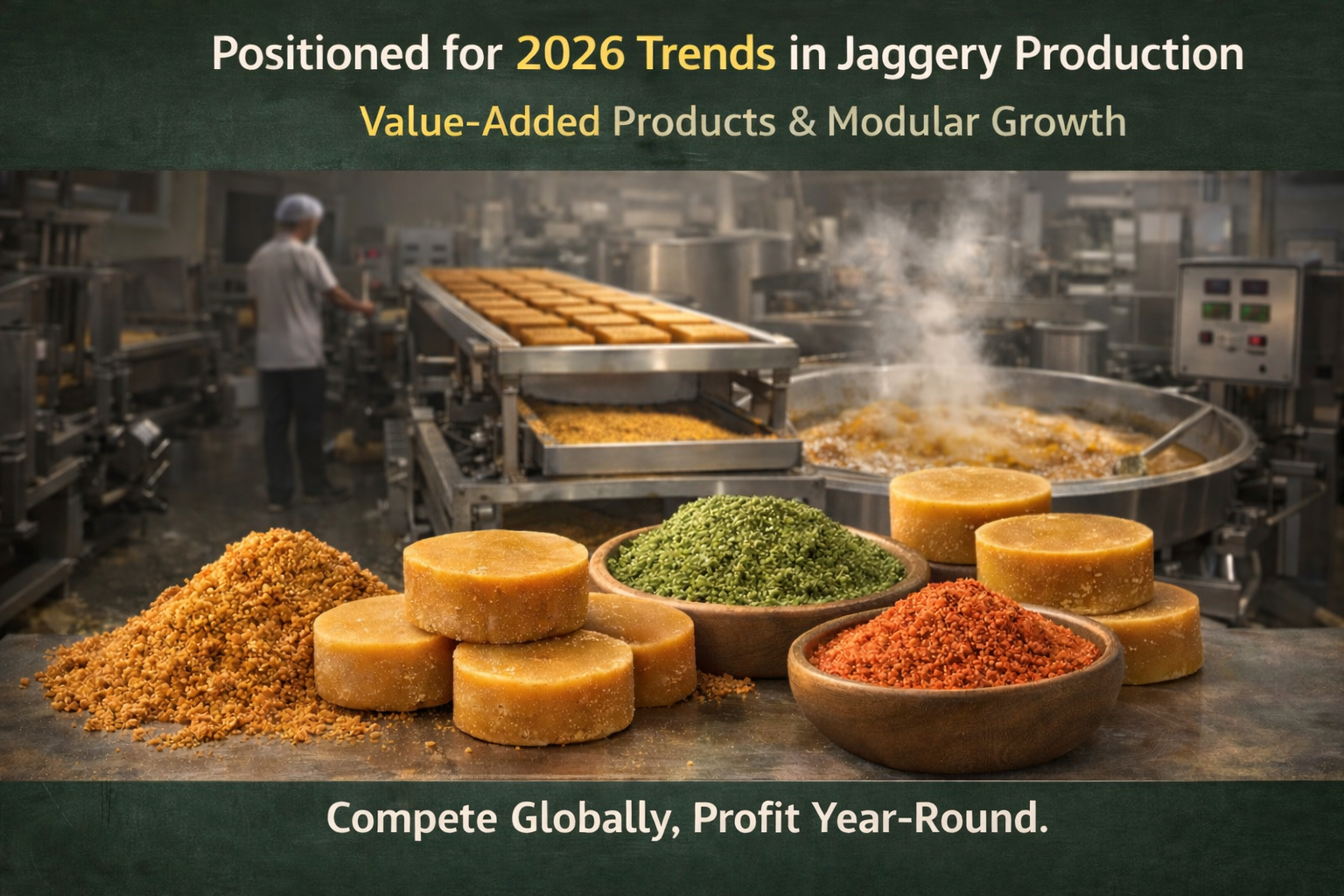




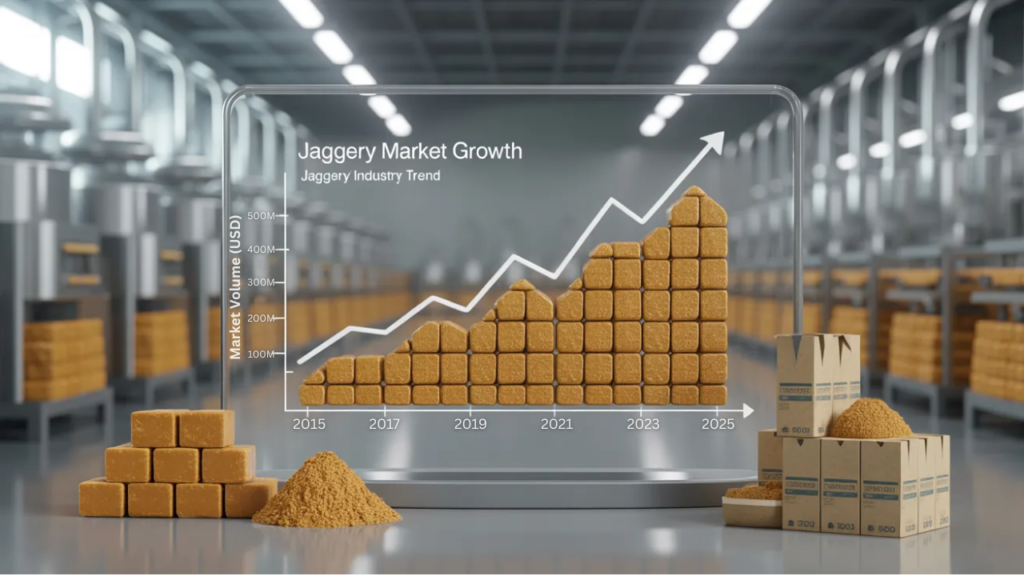
The jaggery industry is no longer limited to traditional markets. A product that was previously only used locally is now in high demand in export markets, health brands, and retail stores.
But as demand grows, a new problem arises: meeting market expectations on a large scale.
Today, buyers don’t just want jaggery. They want:
- Consistent quality
- Clean and hygienic production
- Reliable supply
- Attractive, uniform products
Because of this change, manufacturers need to think about how they make jaggery again. This is where automatic jaggery plants are really helping.
The Problem with Staying Traditional in a Modern Market
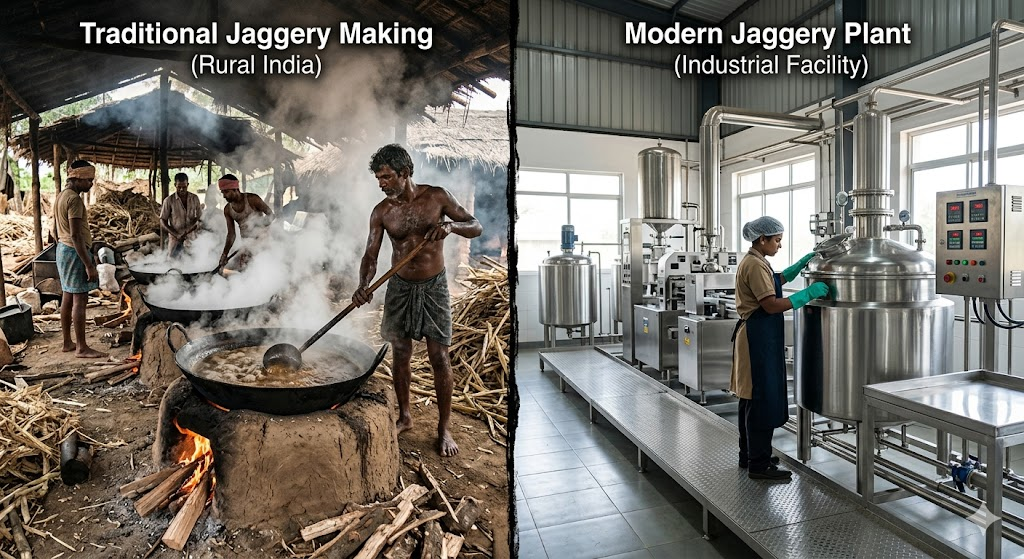
Traditional jaggery production has its strengths, especially in preserving authenticity. However, when it comes to scaling a business, it frequently creates constraints:
- Production depends heavily on labor and experience
- Output quality varies from batch to batch
- Scaling up becomes difficult
- Meeting bulk or consistent orders is challenging
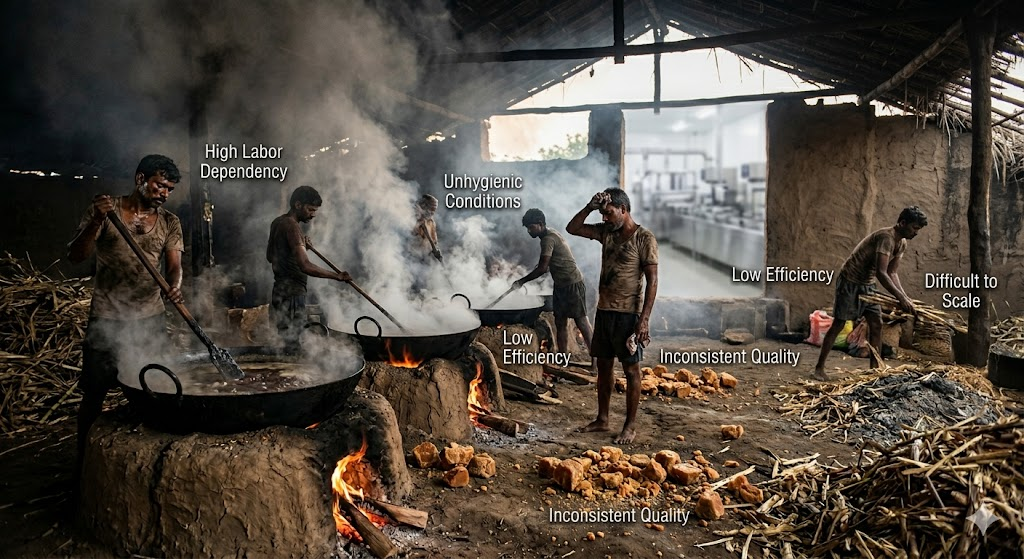
These disparities may have a direct effect on growth in a market where dependability is valued.
Automation: Not Just a Machine, But a Business Upgrade
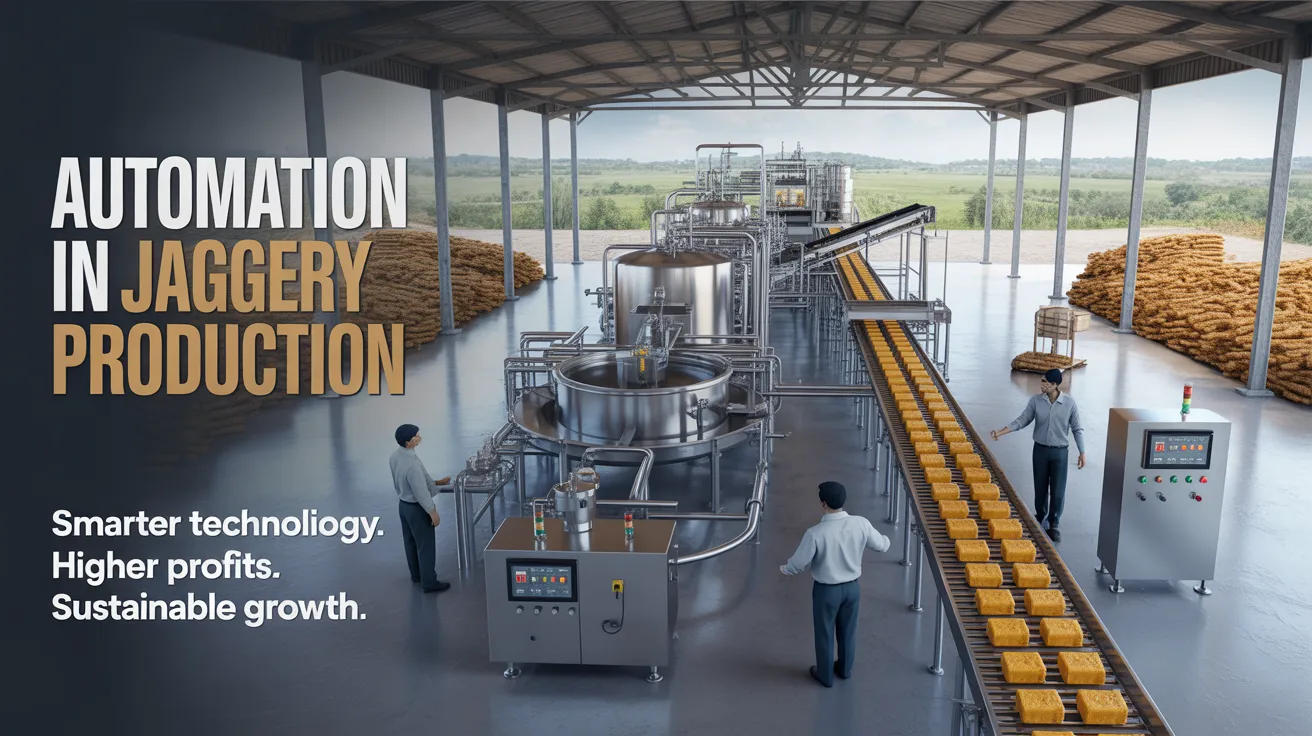
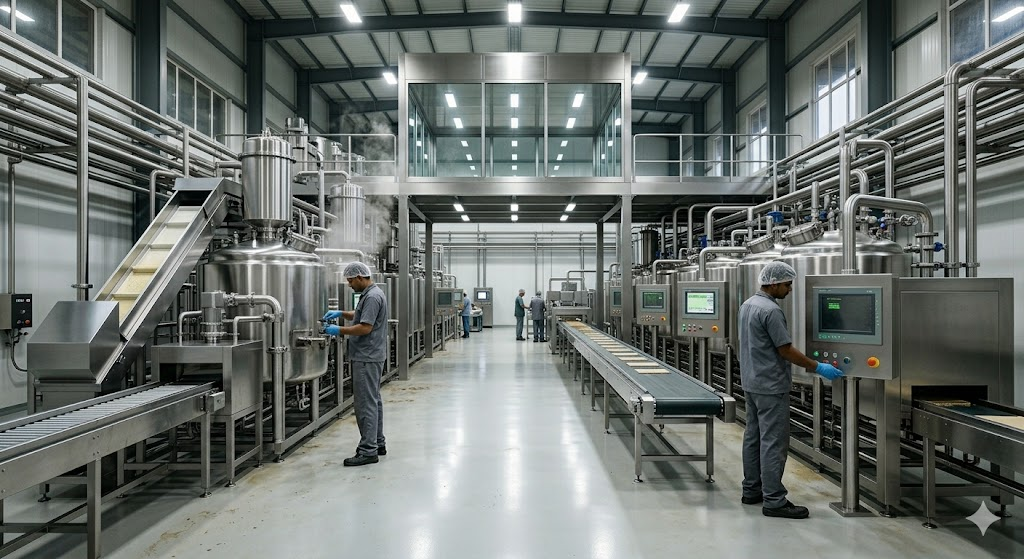
An automatic jaggery plant is more than just machinery; it represents a change towards production that is organised, predictable, and scalable.
Rather than depending on human judgement, the system establishes a controlled environment in which:
- Processes become repeatable
- Quality becomes consistent
- Output becomes predictable
This transformation enables businesses to transition from small-scale production to organised manufacturing.
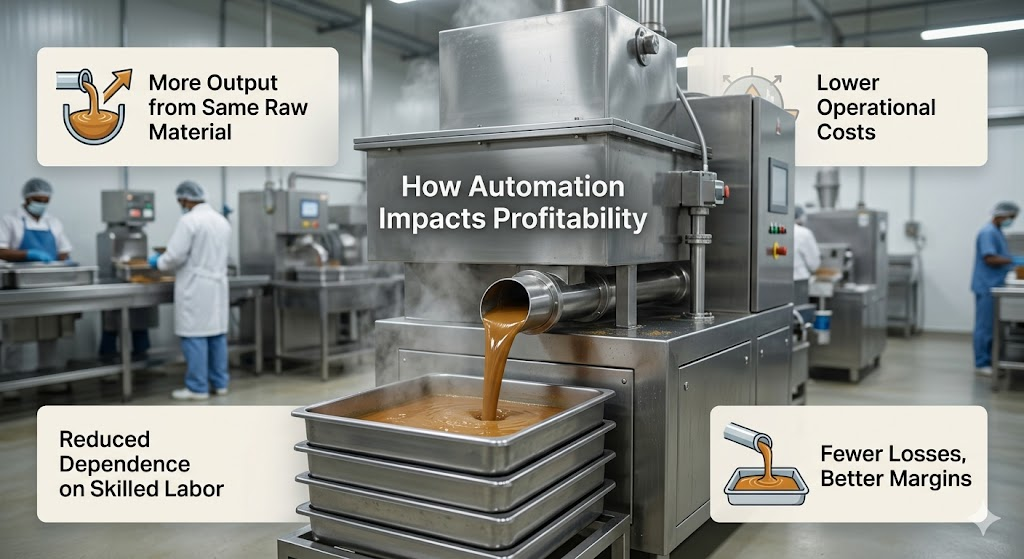
How Automation Impacts Profitability
One of the biggest reasons manufacturers are adopting automatic plants is not just efficiency—it’s profit improvement.
Here’s how:
1. More Output from the Same Raw Material
Efficient juice extraction and controlled processing ensure higher recovery rates, which directly increase production yields.
2. Lower Operational Costs
Reduced waste and optimised fuel use contribute to lower daily operating expenses.
3. Reduced Dependence on Skilled Labor
Businesses don’t need to rely as much on manual expertise when important processes are automated.
4. Fewer Losses, Better Margins
Controlled heating and handling keep food from being overcooked, spilt, or inconsistent, which helps keep your profit margins safe.
Meeting Market Standards Becomes Easier
As jaggery moves into organised retail and branded packaging, expectations are rising.
Automatic jaggery plant help manufacturers meet these standards by delivering:
- Uniform color and texture
- Cleaner production processes
- Better product presentation
This makes it easier to supply to:
- Retail chains
- Wholesalers
- Export buyers
- Health-focused brands
From Local Seller to Organized Brand
One of the most significant advantages of automation is the opportunity for branding and expansion.
When your product is consistent and presentable, you can:
- Build your own brand
- Enter premium markets
- Command better pricing
- Expand beyond local sales
In simple terms, automation helps you go from selling jaggery to running a jaggery business.
Sustainability Adds Long-Term Value
Modern jaggery plants also make more efficient use of resources. As an example, bagasse (the leftover fibre from crushing sugarcane) can be used again as fuel.
This not only reduces waste but also:
- Lowers fuel costs
- Improves efficiency
- Supports environmentally responsible production
In today’s market, sustainability is no longer an option—it is becoming a value addition.
Who Should Think About Automation?

This shift is especially beneficial for:
- Manufacturers planning to scale operations
- Entrepreneurs entering the jaggery business
- Agro-based industries expanding production
- Businesses targeting retail or export markets
If growth is the goal, automation serves as a solid foundation.