

Devanhaar Technologies specializes in automatic jaggery and sugar processing solutions, offering fully automated jaggery plants, jaggery powder plants, and advanced sugarcane processing machinery. Our innovations focus on fuel and water savings, faster production, and eco-friendly operations, ensuring pure, high-quality jaggery with minimal labor and maximum efficiency. 🌿⚙️
Athani, located in Karnataka’s Belagavi district, is an important agricultural region with strong sugarcane cultivation and a well-established sugarcane-based economy. The availability of sugarcane makes the area suitable for businesses looking to establish or expand jaggery manufacturing operations. With changing market requirements, traditional jaggery production is gradually moving toward more organized, hygienic, and efficient processing systems. An Automatic Jaggery Plant in Athani can help manufacturers convert locally available sugarcane into quality jaggery while improving production consistency, fuel utilization, labour management, and overall plant efficiency.
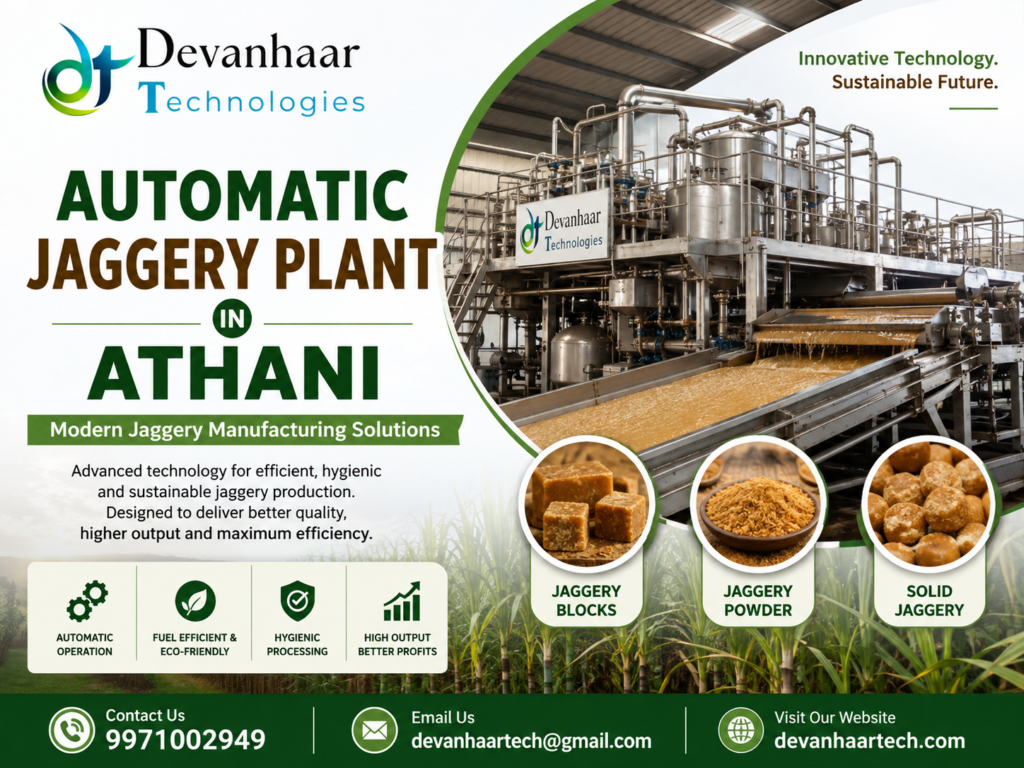
The success of a Jaggery manufacturing unit depends heavily on the availability and regular supply of quality sugarcane. Athani and its surrounding agricultural areas have a strong connection with sugarcane cultivation, creating an advantage for entrepreneurs planning a sugarcane-based processing business. A plant located close to sugarcane-producing areas can reduce the time between harvesting and crushing. This is important because freshly harvested sugarcane can provide better juice quality for processing. Local procurement can also make raw-material planning easier and help manufacturers build relationships with farmers and suppliers. For entrepreneurs in Athani, establishing a jaggery plant can therefore provide an opportunity to add value to locally produced sugarcane rather than depending only on the sale of raw agricultural produce.
An automatic jaggery plant is a modern processing system designed to reduce manual work during jaggery production. It uses machinery and controlled processing systems instead of relying entirely on traditional open-pan methods. The plant can handle important processes such as sugarcane crushing, juice handling, filtration, concentration, heating, and jaggery preparation. The main objective is not only to increase production but also to improve process control and consistency. A properly designed plant can support better hygiene, reduce process variations, and make daily operations easier to manage. The level of automation can also be selected according to the required production capacity and product type. Depending on the business requirement, the plant can be designed to produce solid jaggery, jaggery blocks, jaggery powder, and other customized jaggery products.
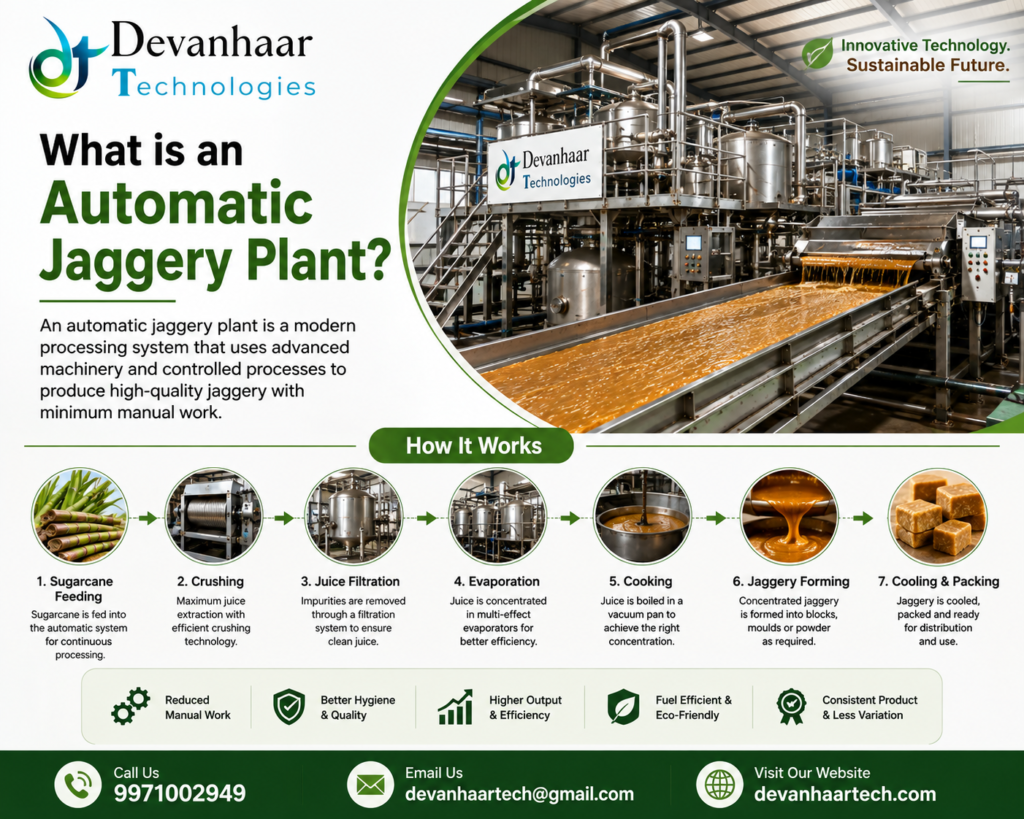
The manufacturing process begins with the feeding of sugarcane into the crushing system. The crusher extracts juice from the cane, while the remaining fibrous material, commonly known as bagasse, can be utilized as a fuel source in an appropriately designed plant. The extracted juice then passes through filtration and cleaning stages to remove unwanted impurities. After clarification, the juice is heated and concentrated until it reaches the required consistency. This stage is particularly important because temperature, concentration, and process control influence the final colour, texture, moisture level, and quality of jaggery. Once the desired concentration is achieved, the concentrated material is transferred for cooling and forming. In a powder jaggery system, additional processing is carried out to achieve the required granulation and consistency. Automation can help maintain more uniform operating conditions throughout these stages.
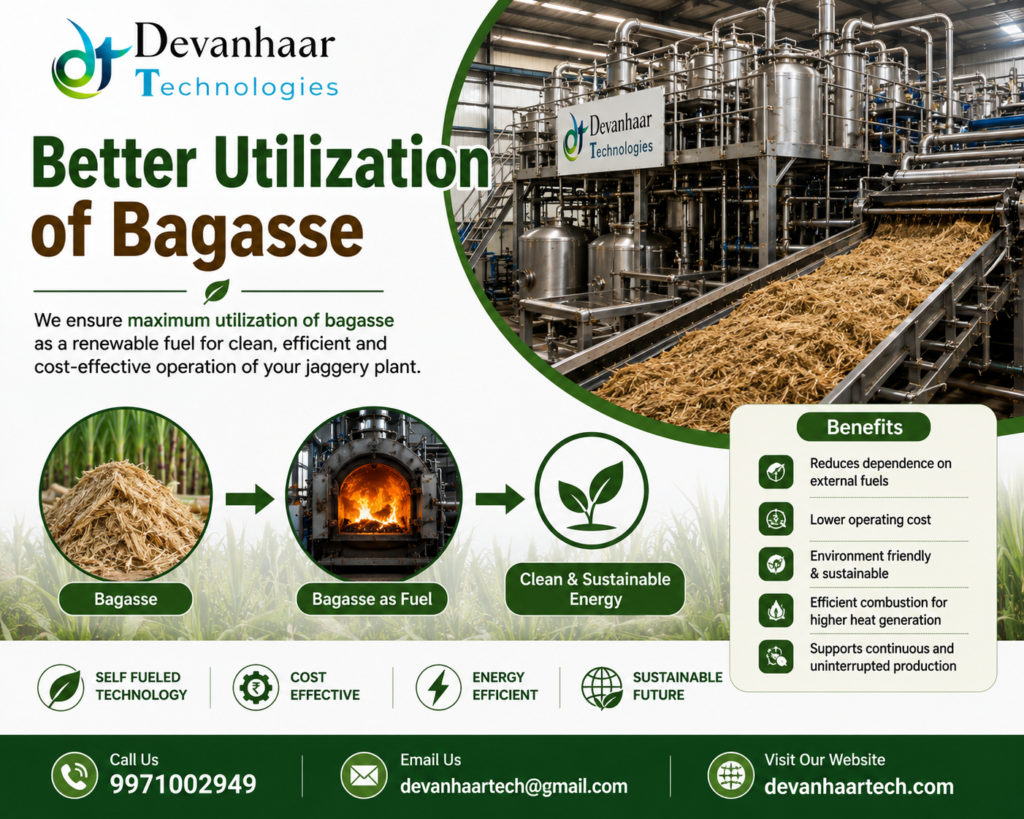
One of the important advantages of a modern jaggery plant is the potential utilization of bagasse generated during sugarcane crushing. Traditional jaggery production may depend on external fuels such as firewood or coal. A modern plant can be designed to utilize bagasse as a process fuel, depending on the plant configuration and energy requirements. This approach can reduce dependence on purchased fuel and improve the utilization of sugarcane by-products. Instead of treating bagasse only as waste, manufacturers can consider it an important resource within the production process. For a sugarcane-producing region such as Athani, efficient use of available biomass can contribute to better operating economics when the system is properly designed and managed.
Modern consumers increasingly look for hygienically manufactured food products. Jaggery is no longer limited to local traditional markets. It is increasingly used by packaged-food companies, sweet manufacturers, restaurants, households, health-food brands, and food processors. A modern jaggery plant can provide a more controlled production environment compared with conventional open processing. Food-contact equipment can be designed using suitable materials, while controlled processing can help maintain consistency between different production batches. Automation also reduces unnecessary human contact with the product during various stages. However, good hygiene still depends on proper cleaning, maintenance, worker practices, and quality-control procedures.
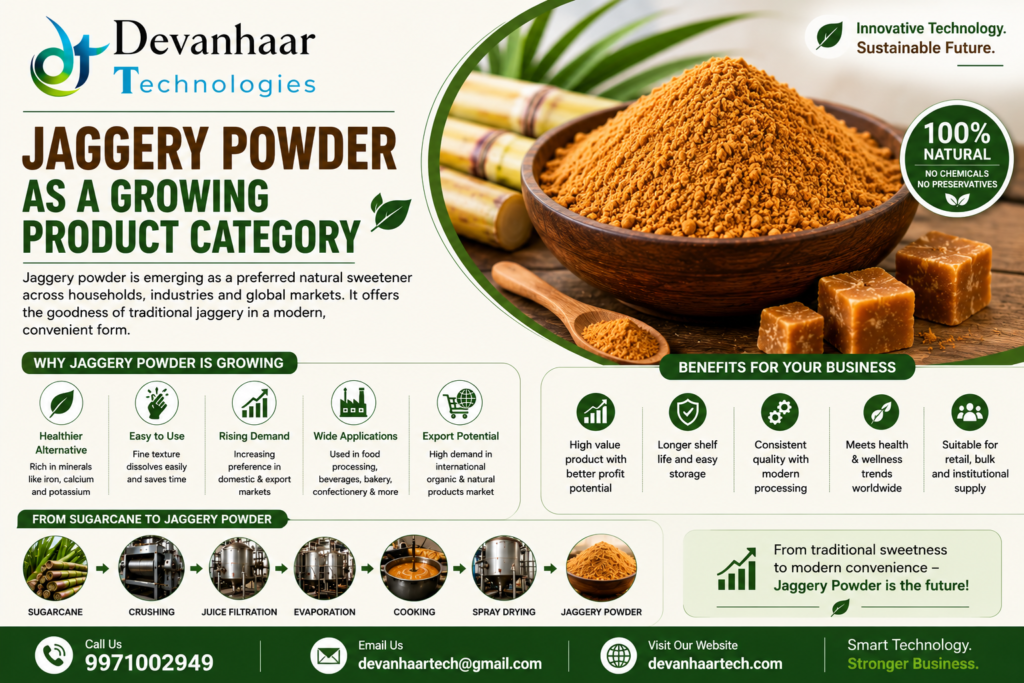
Jaggery Powder has become increasingly convenient for consumers because it can be easily measured, stored, packed, and used in different food applications. It can be used in beverages, sweets, bakery products, traditional recipes, sauces, confectionery, and household cooking. This creates opportunities for manufacturers who want to move beyond conventional jaggery blocks. An entrepreneur in Athani can therefore evaluate whether the local and regional market is better suited to solid jaggery, powder jaggery, or a combination of different products. Product selection should be based on available raw material, investment capacity, market demand, packaging capability, and expected selling price.
There is no single plant capacity that is suitable for every entrepreneur. The right capacity depends on sugarcane availability, expected crushing requirements, investment budget, land availability, labour resources, electricity and fuel arrangements, and the intended market. Before installing a jaggery plant in Athani, it is important to calculate the expected daily sugarcane requirement and compare it with the realistically available supply from nearby farmers and suppliers. A plant should not be selected only on the basis of its maximum production capacity. It should be matched with the actual availability of raw material and the manufacturer’s ability to sell the finished product.
A jaggery manufacturing business can create value at several levels. Sugarcane purchased from farmers becomes processed food, creating an opportunity for higher value addition compared with selling raw cane alone. However, profitability should never be assumed only from the selling price of jaggery. A realistic business calculation should consider sugarcane purchase cost, recovery rate, labour, electricity, fuel, packaging, transportation, maintenance, finance costs, wastage, seasonal variations, and market prices. This is why a detailed feasibility study is important before investment. The same plant can produce different financial results depending on raw-material prices, production efficiency, product quality, and the market in which the jaggery is sold.
Devanhaar Technologies provides modern technology and plant solutions for efficient jaggery manufacturing. Our approach focuses on automation, process efficiency, fuel utilization, and practical industrial design. For entrepreneurs planning a Jaggery Plant in Athani, the plant should be designed according to the required production capacity, sugarcane availability, product type, site conditions, and business objectives. A well-planned jaggery plant is more than a collection of machines. It is an integrated production system where sugarcane handling, crushing, juice processing, heating, concentration, fuel management, cooling, forming, and packaging work together efficiently.
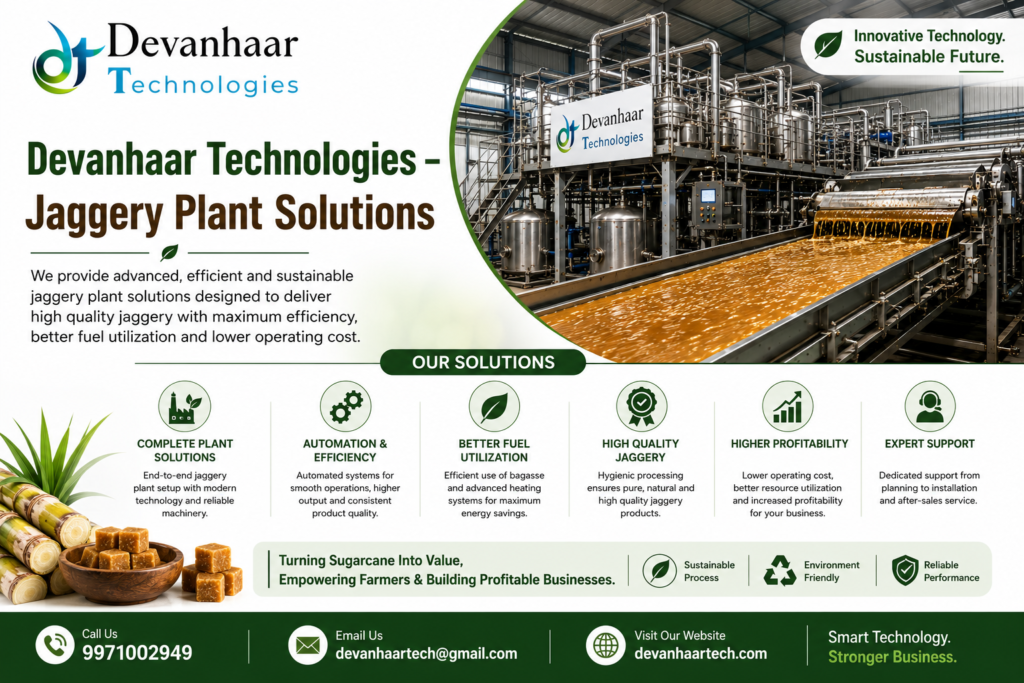
For Athani and nearby sugarcane-producing areas, modern jaggery processing can create an opportunity for value-added agricultural business. With suitable technology, realistic financial planning, reliable sugarcane sourcing, and a proper market strategy, a jaggery manufacturing unit can be developed into a scalable business. If you are planning to establish a Jaggery Plant in Athani, Karnataka, it is important to evaluate your production capacity, sugarcane availability, product requirements, land, budget, and expected market before finalizing the plant. Devanhaar Technologies can help you plan a jaggery manufacturing setup according to your specific business requirements.


